
What are mixed reality showroom experiences?
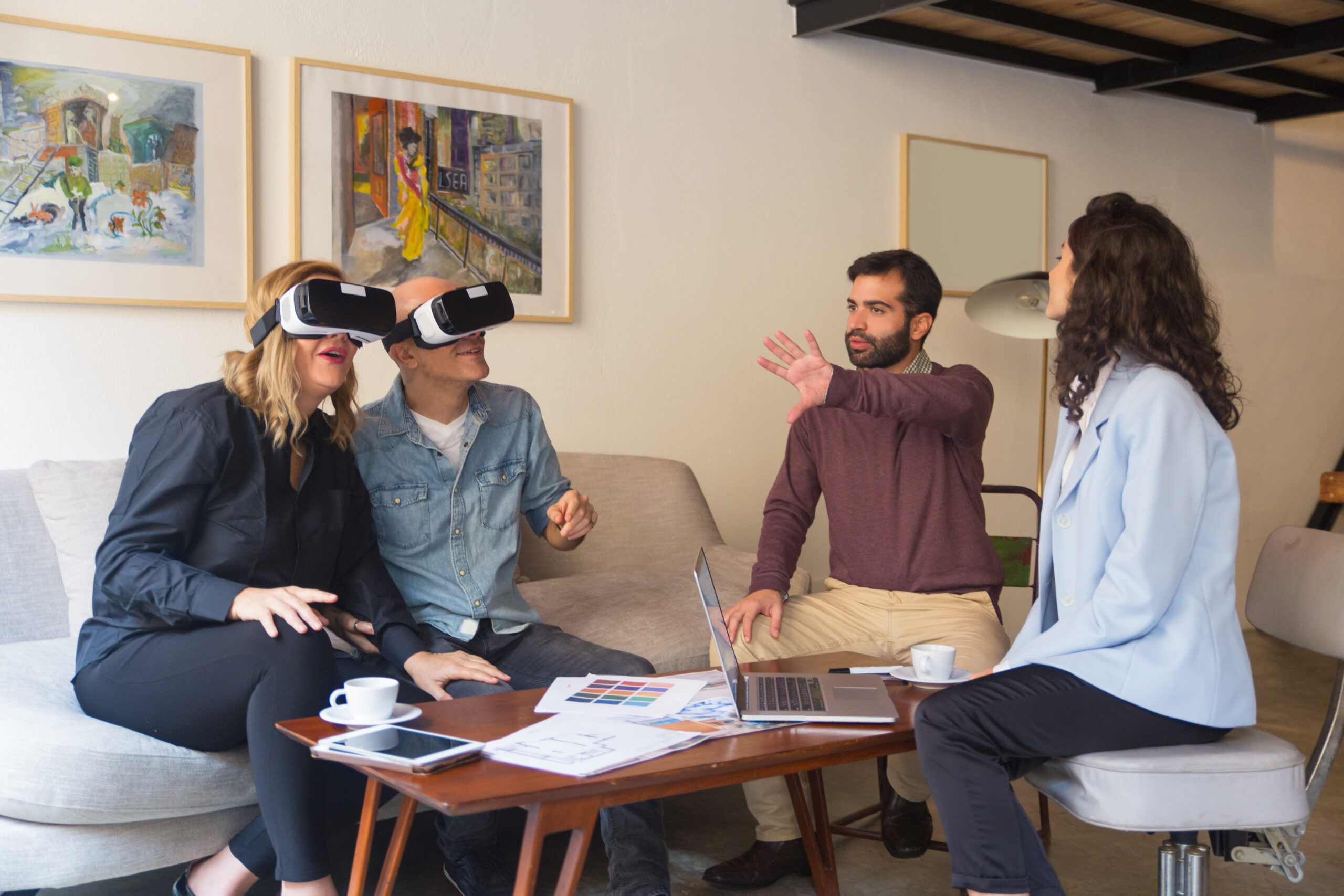
Mixed Reality (MR) Showroom Experiences combine the real world and virtual elements to create interactive, immersive retail environments. Customers use MR devices (like Microsoft HoloLens or Magic Leap) to see digital objects—such as products, configurations, or information—overlaid onto the physical space around them. This blends physical and digital worlds to enhance product visualization and shopping interaction.
Key Features:
- 3D Product Visualization: View and interact with life-sized digital models of products in your real environment.
- Customization in Real-Time: Modify colors, styles, or features and instantly see the results in your physical space.
- Interactive Information: Get detailed product specs, reviews, or demos via overlays and interactive menus.
- Collaborative Shopping: Share the experience remotely with others who can see and discuss the virtual product together.
- Space Planning: Visualize how furniture, appliances, or vehicles fit and look in your home or office before purchase.
Benefits:
- Enhanced Decision Making: Helps customers make informed purchases by “trying” products virtually in their own space.
- Reduced Returns: Accurate visualization decreases mismatch between expectations and actual products.
- Engaging Customer Experience: Provides memorable and unique shopping journeys, boosting brand loyalty.
- Cost Savings: Less need for large physical inventories or showroom spaces.
- Personalization: Tailors product recommendations and customizations in a natural, intuitive way.
Industrial Applications:
- Automotive: Virtual car showroomsallowg customers to customize and inspect vehicles with MR before buying.
- Furniture & Home Decor: Visualizing sofas, tables, and decor items in your actual living space.
- Fashion & Accessories: Try on digital overlays of clothing, glasses, or jewelry using MR mirrors or headsets.
- Consumer Electronics: Inspect gadgets and see internal components or features through mixed reality.
- Real Estate: Walk through virtual property features or planned renovations integrated with existing spaces.
What is mixed reality showroom experiences?
🧠 Key Concept:
Mixed Reality (MR) = Augmented Reality (AR) + Virtual Reality (VR)
MR Showroom = A space (physical or virtual) where customers see, touch, try, or customize products using digital overlays in real time.
🧩 How It Works:
- Physical showroom with smart screens, sensors, or AR glasses
- Digital content overlay (product details, customization, try-ons)
- Interaction via gestures, voice, eye tracking, or touch
- Customer engagement with real-time AI help, product demos, or simulations
📱 Examples of MR in Showrooms:
- 🛋️ IKEA: See how furniture looks in your living room using AR.
- 🚗 BMW: Explore cars in 3D using VR before booking a test drive.
- 👗 ZARA: Use smart mirrors to try outfits virtually.
- 🏠 Real estate: Take a virtual walkthrough of an apartment or villa.
🎯 Purpose & Benefits:
| Purpose | Benefit |
|---|---|
| Interactive shopping | Better product understanding |
| Personalized experiences | Boosts customer satisfaction |
| Reduce showroom space costs | Show more without physical inventory |
| Enable remote participation | Global accessibility |
| Increase engagement & conversions | More sales through immersive try-ons |
🧪 Real-World Use Cases:
| Industry | Use Case Example |
|---|---|
| Retail & Fashion | Virtual fitting rooms and smart mirrors |
| Automotive | VR car customization and test drives |
| Furniture | AR room planning with digital product placement |
| Real Estate | 360° walkthroughs of properties using VR headsets |
| Healthcare | Virtual demo of medical tools or surgery setup |
🔮 Future Potential:
- AI assistants + MR for guided shopping
- Digital twins of stores for remote access
- Voice/gesture-controlled buying
- NFT & blockchain product verification in MR
Who is Required Mixed Reality Showroom Experiences?
1. Retail Brands & Stores
- Especially fashion, electronics, furniture, and luxury goods brands.
- Need to engage customers in innovative ways.
- Want to reduce physical inventory costs and increase sales through interactive product demos.
2. Automobile Manufacturers & Dealers
- To provide virtual test drives and customization of cars.
- Help customers experience features without needing multiple physical models.
3. Real Estate Developers & Agents
- Showcase homes or commercial spaces via virtual walkthroughs.
- Allow buyers to visualize interiors, renovations, and furnishings before purchase.
4. Event Organizers & Exhibition Hosts
- Use MR showrooms for virtual trade shows, product launches, and expos.
- Attract a global audience without geographic limitations.
5. E-Commerce Platforms
- Integrate MR to offer virtual try-ons and product previews.
- Enhance online shopping by bridging the gap between physical and digital experience.
6. Healthcare & Medical Equipment Companies
- Demonstrate complex medical devices and equipment in 3D.
- Train healthcare professionals with immersive demos.
7. Education & Training Providers
- Use MR showrooms for interactive learning about products or technology.
- Enable hands-on experience without physical presence.
8. Tech Startups & Innovation Hubs
- Early adopters of MR to showcase cutting-edge products.
- Drive innovation by providing futuristic customer experiences.
9. Luxury Goods & Fashion Houses
- Offer personalized and exclusive experiences.
- Use MR for virtual fashion shows and exclusive previews.
🎯 Summary:
Mixed reality showroom experiences are primarily required by industries and businesses that want to:
- Provide immersive product exploration
- Offer personalization and customization
- Engage customers remotely or on-site
- Reduce physical showroom costs
- Enhance buyer confidence and decision-making
When is Required Mixed Reality Showroom Experiences?
Courtesy: Suffolk University
During Product Launches & New Releases
- To showcase new products interactively.
- When customers want a detailed, immersive first look.
- Example: Launching a new car model with virtual test drives.
2. When Physical Showrooms Are Limited
- If space is small or inventory is limited.
- MR allows displaying many virtual products without needing physical stock.
- Example: A boutique showcasing an entire collection virtually.
3. In Remote or Pandemic Conditions
- When customers can’t visit stores physically.
- Enables contactless, immersive shopping from home.
- Example: COVID-19 lockdown accelerating virtual showroom adoption.
4. For Personalized & Customizable Products
- When customers want to customize colors, features, or configurations.
- MR allows real-time visualization of choices.
- Example: Furniture with customizable fabrics/colors shown in AR.
5. During Trade Shows and Virtual Events
- To create engaging digital booths.
- When brands want to reach global audiences without travel.
- Example: Virtual fashion week or tech expo.
6. To Enhance Customer Experience and Engagement
- When brands aim to differentiate themselves through innovation.
- Creating memorable, interactive experiences to boost brand loyalty.
- Example: Retailers adding AR mirrors or VR try-ons.
7. When Training or Demonstration Is Needed
- For complex or technical products needing hands-on demos.
- When physical product demos are expensive or impractical.
- Example: Medical equipment training via MR showroom.
8. When Expanding Online & Omni-channel Strategies
- To bridge physical and digital retail channels.
- Providing consistent, immersive shopping experiences everywhere.
- Example: Integrating MR showrooms into e-commerce platforms.
Summary Table:
| Scenario | Reason for MR Showroom Requirement |
|---|---|
| Product launches | Immersive introduction & demos |
| Limited physical space | Virtual inventory & displays |
| Remote access / pandemic | Contactless, immersive shopping |
| Personalized/custom products | Real-time customization visualization |
| Trade shows / virtual events | Global reach without travel |
| Enhance customer experience | Differentiate & engage |
| Training / demos | Safe, cost-effective product demonstrations |
| Omni-channel retail strategy | Seamless physical & digital integration |
Where is Required Mixed Reality Showroom Experiences?
Physical Retail Stores & Flagship Showrooms
- Enhance in-store experience with digital overlays.
- Let customers try virtual customizations or see product features live.
- Example: Clothing stores with AR mirrors, electronics stores with 3D product demos.
2. Trade Shows, Expos & Conferences
- Virtual or hybrid event spaces to showcase products to global attendees.
- Reduce cost of shipping products to exhibitions.
- Example: Auto expos offering virtual vehicle tours.
3. Online E-Commerce Platforms
- Integrate MR experiences for customers shopping from home.
- Use AR try-ons or VR product explorations embedded into websites/apps.
- Example: Furniture retailers letting customers see products in their own rooms.
4. Car Dealerships & Auto Showrooms
- Let buyers virtually explore and customize vehicles.
- Enable immersive test drives without physical cars.
- Example: BMW’s VR showroom locations.
5. Real Estate Agencies & Property Showrooms
- Show virtual walkthroughs of properties under construction or remote.
- Help clients visualize interior designs and modifications.
- Example: Real estate offices equipped with VR headsets.
6. Pop-up Stores & Brand Activations
- Temporary spaces with immersive MR setups.
- Generate buzz and engage customers interactively.
- Example: Fashion brands at music festivals or sports events.
7. Training Centers & Product Demo Rooms
- For technical or medical equipment requiring hands-on demos.
- Safe, controlled environment to educate customers or staff.
- Example: Medical device companies’ MR demo centers.
8. Corporate & Innovation Labs
- To showcase prototypes, R&D products, or future concepts.
- Internal and client presentations enhanced with MR.
- Example: Automotive companies’ innovation hubs.
9. Remote or Rural Markets
- Places where physical showrooms are costly or inaccessible.
- MR allows virtual presence and rich product exploration.
- Example: Brands expanding to new geographical areas digitally.
Summary Table:
| Location/Setting | Why MR Showroom is Required |
|---|---|
| Physical Retail Stores | Boost engagement and personalization |
| Trade Shows & Expos | Global reach and cost-effective showcasing |
| Online Platforms | Immersive e-commerce experiences |
| Auto Showrooms | Virtual test drives and customization |
| Real Estate Showrooms | Virtual walkthroughs and interior visualization |
| Pop-up Stores | Brand engagement and marketing buzz |
| Training Centers | Safe, effective product demos |
| Innovation Labs | Prototype and concept showcasing |
| Remote/Rural Markets | Access to customers without physical presence |
How is Required Mixed Reality Showroom Experiences?
Assess Business Goals and Customer Needs
- Identify what the MR showroom aims to achieve: e.g., increase sales, improve engagement, showcase new products.
- Understand target audience preferences for immersive experiences.
2. Choose the Right Technology
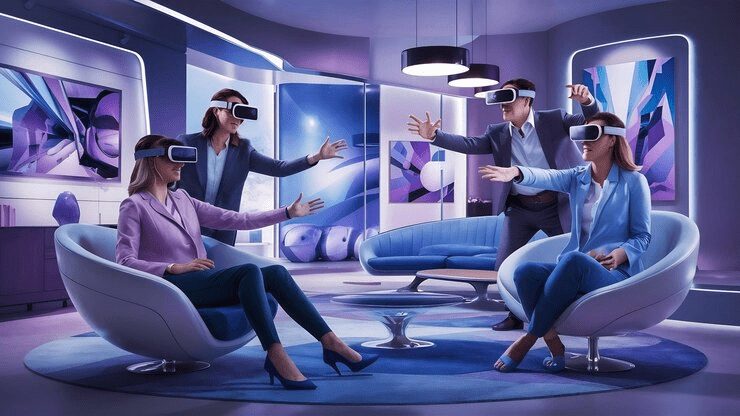
- Hardware: AR glasses (Microsoft HoloLens, Magic Leap), VR headsets (Oculus Quest, HTC Vive), smart mirrors, interactive screens, sensors, motion trackers.
- Software: 3D modeling tools, MR content platforms (Unity, Unreal Engine), AR toolkits (ARKit, ARCore), AI assistants for interaction.
3. Design Immersive Content
- Develop detailed 3D models of products.
- Create interactive elements like customization options, animations, info overlays.
- Integrate voice commands, gesture controls, or touch interfaces.
4. Set Up the Physical or Virtual Space
- Physical: Install hardware and configure space for AR/VR interaction, lighting, and user flow.
- Virtual: Develop VR environments or MR web apps accessible remotely.
5. Integrate Customer Interaction Tools
- Enable product try-ons, customization, demos.
- Provide AI-driven chatbots or guides for personalized assistance.
- Implement real-time analytics to track user behavior and preferences.
6. Test and Iterate
- Conduct usability testing with real users.
- Gather feedback to improve interface, content, and experience.
- Optimize performance for smooth interaction without lag or glitches.
7. Train Staff and Support Customers
- Educate showroom staff to assist customers using MR tech.
- Offer tutorials or help within the experience for self-service.
8. Launch and Promote
- Announce the MR showroom experience via marketing campaigns.
- Use demos and events to attract customers.
9. Maintain and Update
- Regularly update content and software.
- Add new products or features based on feedback and trends.
🛠️ Key Components and Tools
| Component | Purpose |
|---|---|
| AR/VR Headsets | Immersive visualization |
| Smart Mirrors | Virtual try-ons for fashion and accessories |
| Interactive Displays | Touch and gesture-based product exploration |
| 3D Modeling Software | Create realistic product models |
| MR Content Platforms | Build and manage MR environments |
| AI Chatbots | Personalized customer assistance |
Summary:
Mixed Reality Showroom Experiences are required by:
- Analyzing customer & business needs
- Selecting suitable MR hardware and software
- Designing interactive and immersive content
- Deploying physical or virtual showroom setups
- Providing intuitive user interaction methods
- Continuously testing, updating, and training
Case Study on Mixed Reality Showroom Experiences?
Case Study: BMW’s Mixed Reality Showroom Experience
Background
BMW, a leading luxury automobile manufacturer, faced challenges with traditional car showrooms:
- Customers want personalized configurations which are hard to showcase physically.
- Long sales cycles with customers wanting deeper product understanding before purchase.
To address this, BMW adopted Mixed Reality (MR) Showroom Experiences leveraging Microsoft HoloLens technology.
Objective
- Provide customers with a highly immersive, interactive showroom experience.
- Enable virtual exploration and customization of vehicles.
- Increase customer engagement and reduce time-to-decision.
- Extend showroom reach beyond physical limits.
Implementation
Technology Used:
- Microsoft HoloLens AR headsets.
- Custom MR software developed by BMW’s innovation teams.
- Integration with backend vehicle databases for real-time configuration.
Experience Features:
- Customers wear HoloLens glasses and see a life-sized 3D hologram of the car in front of them.
- Users can change colors, rims, interiors, and other features interactively with hand gestures and voice commands.
- Detailed information about each part appears as overlays.
- Customers can see the car from all angles, including under the hood and inside the cabin.
- Virtual test drive simulations enhance immersion.
- Sales representatives guide customers through the experience or customers explore independently.
Results
- Customer Engagement: Significantly increased time spent in showrooms and positive feedback on the experience.
- Sales Impact: Faster decision-making by customers, higher conversion rates, and increased orders for custom configurations.
- Cost Efficiency: Reduced need to stock all variants physically, saving on showroom space and logistics.
- Brand Perception: Positioned BMW as an innovative, tech-forward company.
Challenges
- Initial investment in MR hardware and software development was high.
- Training staff to effectively use and support the MR showroom experience.
- Ensuring the MR experience runs smoothly with minimal glitches.
Lessons Learned
- User-friendly interfaces and intuitive controls are crucial for adoption.
- Continuous updates and new features keep customers engaged.
- Blending physical and virtual elements provides the best overall experience.
- MR showrooms can complement, not replace, physical test drives and human interaction.
Conclusion
BMW’s MR showroom experience is a successful example of how mixed reality can revolutionize retail environments, especially for complex, high-value products. The immersive experience not only enhances customer satisfaction but also drives business growth and brand differentiation.
White paper on Mixed Reality Showroom Experiences?
Courtesy: Phiaro Inc
White Paper: Mixed Reality Showroom Experiences
Executive Summary
Mixed Reality (MR) Showroom Experiences represent the convergence of physical and digital retail environments by blending augmented reality (AR) and virtual reality (VR) technologies. MR allows consumers to interact with virtual objects seamlessly integrated into the real world, transforming traditional showroom experiences into immersive, interactive journeys.
This white paper explores how MR showrooms are reshaping retail, the underlying technologies, implementation strategies, challenges, and future trends. It serves as a comprehensive guide for businesses aiming to adopt MR to enhance customer engagement, drive sales, and future-proof their retail strategies.
1. Introduction
1.1 Definition of Mixed Reality Showroom Experiences
Mixed Reality Showroom Experiences use advanced spatial computing to overlay and integrate digital content—such as 3D product models, interactive interfaces, and real-time data—into physical showroom environments or fully virtual spaces accessible remotely. Unlike AR or VR alone, MR enables real and virtual objects to coexist and interact dynamically.
1.2 Importance in Modern Retail
Consumer expectations for personalized, engaging, and convenient shopping are driving adoption of immersive technologies. MR Showrooms allow retailers to:
- Showcase extensive product catalogs without physical constraints.
- Provide personalized customization in real-time.
- Bridge the gap between online and offline shopping.
- Reduce costs associated with physical inventory and logistics.
2. Technology Overview
2.1 Hardware Components
- MR Headsets: Devices like Microsoft HoloLens, Magic Leap provide hands-free immersive visualization.
- VR Headsets: Oculus Quest, HTC Vive for fully virtual showroom environments.
- Smart Mirrors and Interactive Displays: Combine touch and AR overlays for retail interaction.
- Sensors and Cameras: Track user movements and gestures for natural control.
2.2 Software Platforms
- 3D Modeling and Rendering: Tools such as Unity, Unreal Engine for creating realistic product visuals.
- AR/MR SDKs: ARKit (Apple), ARCore (Google) for device compatibility and tracking.
- AI and Analytics: Enhance personalization and gather user behavior data.
3. Implementation Strategy
3.1 Assessing Business Needs
- Identify target customer segments and key goals.
- Choose between physical, virtual, or hybrid showroom setups.
3.2 Content Development
- Create high-fidelity 3D models and interactive features.
- Integrate product databases for real-time customization.
3.3 Infrastructure Setup
- Deploy necessary hardware and network support.
- Train staff to manage and assist customers.
3.4 User Experience Design
- Design intuitive interfaces using gestures, voice, and touch.
- Test rigorously to ensure smooth, engaging interactions.
4. Benefits of MR Showroom Experiences
- Enhanced Customer Engagement: Interactive and immersive shopping journeys.
- Increased Conversion Rates: Faster decision-making with personalized visualization.
- Cost Efficiency: Reduced need for physical inventory and space.
- Brand Differentiation: Positioning as a tech-forward innovator.
- Data Insights: Analytics on customer preferences and behaviors.
5. Challenges and Considerations
- High Initial Investment: Hardware, software development, and training costs.
- Technology Limitations: Battery life, device comfort, and software bugs.
- User Adoption: Need for intuitive design and staff support.
- Content Accuracy: Ensuring realistic and up-to-date product representation.
- Data Privacy: Managing user data securely.
6. Case Studies and Industry Applications
- Automotive: BMW’s MR showroom enabling virtual vehicle customization and test drives.
- Fashion Retail: AR mirrors for virtual try-ons.
- Real Estate: Virtual walkthroughs of properties using MR.
- Furniture: Visualization of customizable furniture in customer homes.
7. Future Outlook
- Advances in MR hardware will improve comfort and accessibility.
- AI integration will enable hyper-personalized experiences.
- 5G networks will support seamless, high-fidelity streaming.
- Expansion beyond retail into education, healthcare, and manufacturing.
8. Conclusion
Mixed Reality Showroom Experiences are poised to redefine retail by merging the best of physical and digital worlds. Businesses that invest strategically in MR can unlock new levels of customer engagement, operational efficiency, and competitive advantage.
9. References
- Industry reports on MR technology adoption
- Case studies from leading brands (BMW, IKEA)
- Market analysis on immersive retail trends
Industrial Application of mixed reality showroom experiences?
Automotive Industry
Application:
- Virtual Vehicle Showrooms: Customers explore life-size 3D holograms of cars.
- Customization: Change colors, parts, interiors interactively.
- Virtual Test Drives: Simulate driving experience in different environments.
- Training: Use MR to train technicians and sales staff on new models.
Benefits:
- Reduces need for extensive physical inventory.
- Enhances customer confidence and shortens sales cycles.
- Improves technical training with realistic simulations.
2. Retail & Fashion
Application:
- Virtual Try-Ons: AR mirrors or MR devices allow customers to try clothes, accessories, or makeup virtually.
- Product Visualization: Explore products in 3D with interactive features.
- Personalized Shopping: Real-time customization and styling advice.
Benefits:
- Increases engagement and reduces product returns.
- Enables seamless omnichannel retail experiences.
- Saves physical space by reducing in-store inventory.
3. Real Estate & Architecture
Application:
- Virtual Property Tours: Walk through properties virtually before visiting physically.
- Interior Design: Visualize furniture and decor changes in real environments.
- Project Visualization: Clients and stakeholders can review projects interactively during planning.
Benefits:
- Enhances decision-making with realistic previews.
- Saves time and cost on physical mockups and site visits.
- Improves collaboration among designers, clients, and contractors.
4. Manufacturing & Industrial Equipment
Application:
- Product Demonstrations: Showcase complex machinery and systems interactively.
- Maintenance Training: Simulate equipment operation and repair procedures.
- Design Validation: Visualize prototypes in real space for ergonomic and functional testing.
Benefits:
- Reduces downtime with better training.
- Improves safety by simulating hazardous scenarios.
- Accelerates product development and validation.
5. Consumer Electronics
Application:
- Product Demos: Explore features and functionalities of gadgets virtually.
- Configuration and Customization: Tailor products before purchase.
- Customer Support: Use MR to guide users through troubleshooting.
Benefits:
- Enhances customer understanding of product features.
- Reduces support calls and returns.
- Enables interactive marketing campaigns.
6. Healthcare & Medical Devices
Application:
- Equipment Showrooms: Demonstrate medical devices and tools in MR.
- Training Simulations: Educate healthcare professionals on device usage.
- Patient Education: Visualize treatments and procedures.
Benefits:
- Improves training outcomes.
- Helps patients make informed decisions.
- Accelerates adoption of new medical technologies.
Summary Table
| Industry | Application Examples | Key Benefits |
|---|---|---|
| Automotive | Virtual showrooms, customization, test drives | Cost savings, engagement, training |
| Retail & Fashion | Virtual try-ons, product visualization | Reduced returns, space savings |
| Real Estate | Virtual tours, interior design, project reviews | Better decisions, collaboration |
| Manufacturing | Equipment demos, maintenance training, prototyping | Safety, efficiency, validation |
| Consumer Electronics | Product demos, customization, customer support | Better experience, fewer returns |
| Healthcare | Device demos, training, patient education | Improved training, patient trust |
References
- ^ “VR Training for Maritime, Renewables & High-Risk Work”. 3t. Retrieved 25 March 2025.
- ^ Milgram, Paul; Takemura, Haruo; Utsumi, Akira; Kishino, Fumio (1995). “Augmented reality: A class of displays on the reality-virtuality continuum”. In Das, Hari (ed.). Telemanipulator and Telepresence Technologies. Vol. 2351. pp. 282–292. doi:10.1117/12.197321.
- ^ Jump up to:a b “virtual | Search Online Etymology Dictionary”. www.etymonline.com.
- ^ Antonin Artaud, The Theatre and its Double Trans. Mary Caroline Richards. (New York: Grove Weidenfeld, 1958).
- ^ Faisal, Aldo (2017). “Computer science: Visionary of virtual reality”. Nature. 551 (7680): 298–299. Bibcode:2017Natur.551..298F. doi:10.1038/551298a.
- ^ Rosson, Lois (15 April 2014). “The Virtual Interface Environment Workstation (VIEW), 1990”. NASA. Archived from the original on 1 November 2016. Retrieved 26 March 2024.
- ^ “Definition of cyberspace | Dictionary.com”. www.dictionary.com.
- ^ Baltrušaitis, Jurgis; Strachan, W.J. (1977). Anamorphic art. New York: Harry N. Abrams. p. 4. ISBN 9780810906624.
- ^ “Virtual Reality Society”. Virtual Reality Society. 2 January 2020. Retrieved 19 January 2023.
- ^ “Charles Wheatstone: the father of 3D and virtual reality technology”. Feature from King’s College London. 28 October 2016. Retrieved 19 January 2023.
- ^ Holly Brockwell (3 April 2016). “Forgotten genius: the man who made a working VR machine in 1957”. Tech Radar. Retrieved 7 March 2017.
- ^ Watkins, Christopher; Marenka, Stephen (1994). Virtual Reality Excursions with Programs in C. Academic Press Inc. p. 58. ISBN 0-12-737865-0.
- ^ “National Center for Supercomputing Applications: History”. The Board of Trustees of the University of Illinois. Archived from the original on 21 August 2015.
- ^ Nelson, Ted (March 1982). “Report on Siggraph ’81”. Creative Computing.
- ^ Fisher, Scott S. (22 December 2016). “The NASA Ames VIEWlab Project—A Brief History”. Presence: Teleoperators and Virtual Environments. 25 (4): 339–348. doi:10.1162/PRES_a_00277.
- ^ Thomas, Wayne (December 2005). “Section 17”. “Virtual Reality and Artificial Environments”, A Critical History of Computer Graphics and Animation.
- ^ “Zimmerman & Lanier Develop the DataGlove, a Hand Gesture Interface Device : History of Information”. www.historyofinformation.com.
- ^ Barlow, John Perry (1990). “Being in Nothingness”. Wired.
- ^ “Cyberspace – The New Explorers”. 1989. Retrieved 8 August 2019 – via Internet Archive.
- ^ Delaney, Ben (2017). Virtual Reality 1.0 — The 90s: The Birth of VR. CyberEdge Information Services. p. 40. ISBN 978-1513617039.
- ^ Stoker, Carol. “MARSMAP: AN INTERACTIVE VIRTUAL REALITY MODEL OF THE PATHFINDER LANDING SITE” (PDF). NASA JPL. NASA. Retrieved 7 August 2019.
- ^ Cullen, Chris (13 April 2017). “Pioneering VR Stories Part 1: Idaho National Laboratory In The ’90s”. Idaho Virtual Reality Council. Retrieved 7 August 2019.
- ^ Engler, Craig E. (November 1992). “Affordable VR by 1994”. Computer Gaming World. p. 80. Retrieved 4 July 2014.
- ^ Horowitz, Ken (28 December 2004). “Sega VR: Great Idea or Wishful Thinking?”. Sega-16. Archived from the original on 14 January 2010. Retrieved 21 August 2010.
- ^ “Virtuality”. YouTube. 17 April 2008. Archived from the original on 11 December 2021. Retrieved 21 September 2014.
- ^ Goad, Angela. “Carolina Cruz-Neira | Introductions Necessary”. Introductions Necessary. Retrieved 28 March 2017.
- ^ Smith, David (24 November 2014). “Engineer envisions sci-fi as reality”. Arkansas Online. Retrieved 28 March 2017.
- ^ Gonzales, D.; Criswell, D.; Heer, E (1991). Gonzales, D. (ed.). “Automation and Robotics for the Space Exploration Initiative: Results from Project Outreach” (PDF). NASA STI/Recon Technical Report N. 92 (17897): 35. Bibcode:1991STIN…9225258G.
- ^ Rosenberg, Louis (1992). “The Use of Virtual Fixtures As Perceptual Overlays to Enhance Operator Performance in Remote Environments.”. Technical Report AL-TR-0089, USAF Armstrong Laboratory, Wright-Patterson AFB OH, 1992.
- ^ Rosenberg, L.B. (1993). “Virtual Fixtures: Perceptual Overlays for Telerobotic Manipulation”. In Proc. of the IEEE Annual Int. Symposium on Virtual Reality (1993): pp. 76–82.
- ^ “News & Information”. Beep! Mega Drive. No. 1994–08. July 1994. p. [1].
- ^ Kevin Williams. “The Virtual Arena – Blast From The Past: The VR-1”. VRFocus. VR Focus.
- ^ “Sega Teams Up With W. Industries For Its VR Game”. Game Machine. No. 455. August 1993. p. [2].
- ^ NEXT Generation. June 1995. Retrieved 20 October 2015 – via archive.org.
- ^ “Nintendo Virtual Boy on theverge.com”. Archived from the original on 1 April 2014.
- ^ Dye, Lee (22 February 1995). “Virtual Reality Applications Expand : Imaging: Technology is finding important places in medicine, engineering and many other realms”. Los Angeles Times.
- ^ Au, Wagner James. The Making of Second Life, pg. 19. New York: Collins. ISBN 978-0-06-135320-8.
- ^ “Google Street View in 3D: More Than Just an April Fool’s Joke”. 6 April 2010.
- ^ Rubin, Peter (2014). “Oculus Rift”. Wired. Vol. 22, no. 6. p. 78.
- ^ “E3 12: John Carmack’s VR Presentation”. Gamereactor. 27 July 2012. Archived from the original on 11 December 2021. Retrieved 20 February 2019.
- ^ Jump up to:a b c Gilbert, Ben (12 December 2018). “Facebook just settled a $500 million lawsuit over virtual reality after a years-long battle — here’s what’s going on”. Business Insider. Retrieved 20 February 2019.
- ^ “Facebook to buy Oculus virtual reality firm for $2B”. Associated Press. 25 March 2014. Retrieved 27 March 2014.
- ^ Metz, Cade (25 March 2014). “Facebook Buys VR Startup Oculus for $2 Billion”. WIRED. Retrieved 13 March 2017.
- ^ Spangler, Todd (12 December 2018). “ZeniMax Agrees to Settle Facebook VR Lawsuit”. Variety. Retrieved 20 February 2019.
- ^ “Not-quite-live bloga : panel discussion with John Carmack, Tim Sweeney, Johan Andersson”. The Tech Report. Retrieved 14 December 2016.
- ^ James, Paul (30 January 2014). “30 Minutes Inside Valve’s Prototype Virtual Reality Headset: Owlchemy Labs Share Their Steam Dev Days Experience – Road to VR”. Road to VR. Retrieved 14 December 2016.
- ^ James, Paul (18 November 2013). “Valve to Demonstrate Prototype VR HMD and Talk Changes to Steam to “Support and Promote VR Games” – Road to VR”. Road to VR. Retrieved 14 December 2016.
- ^ “Valve showing off new virtual reality hardware and updated Steam controller next week”. The Verge. 24 February 2015. Retrieved 1 March 2015.
- ^ “Valve’s VR headset revealed with Oculus-like features”. The Verge. 3 June 2014. Retrieved 1 March 2015.
- ^ “HTC Vive: Everything you need to know about the SteamVR headset”. Wareable. 5 April 2016. Retrieved 19 June 2016.
- ^ “Sony Announces ‘Project Morpheus:’ Virtual Reality Headset For PS4”. Forbes.
- ^ “Pioneers Pushing Boundaries”. China Pictorial. 823: 46–55. January 2017.
- ^ Agam, Shah (13 December 2016). “Sony’s PlayStation VR tops HTC Vive in headset shipment battle”. PC World.
- ^ “Gloveone: Feel Virtual Reality”. Kickstarter. Retrieved 15 May 2016.
- ^ Jump up to:a b c d Kelly, Kevin (April 2016). “The Untold Story of Magic Leap, the World’s Most Secretive Startup”. WIRED. Retrieved 13 March 2017.
- ^ “Vive Shipment Updates – VIVE Blog”. VIVE Blog. 7 April 2016. Archived from the original on 30 June 2016. Retrieved 19 June 2016.
- ^ Prasuethsut, Lily (2 August 2016). “HTC Vive: Everything you need to know about the SteamVR headset”. Wareable. Retrieved 13 March 2017.
- ^ Martindale, Jon (15 February 2017). “Vive-like sensor spotted in new Sony patent could make its way to PlayStation VR”. Digital Trends. Retrieved 13 March 2017.
- ^ “From the lab to the living room: The story behind Facebook’s Oculus Insight technology and a new era of consumer VR”. tech.fb.com. 22 August 2019. Retrieved 1 September 2020.
- ^ “Headset – Valve Index® – Upgrade your experience – Valve Corporation”. www.valvesoftware.com. 9 May 2019. Retrieved 28 February 2021.
- ^ Robertson, Adi (16 September 2020). “Oculus Quest 2 Review: Better, Cheaper VR”. theverge.com. Retrieved 16 December 2020.
- ^ Ochanji, Sam (27 March 2022). “Survey: Quest 2 Accounted for 80% of Headset Sales in 2021”. Virtual Reality Times. Retrieved 29 March 2022.
- ^ “VRM Switzerland – Professional Flight Training Solutions”. Retrieved 10 May 2021.
- ^ “EASA approves the first Virtual Reality (VR) based Flight Simulation Training Device”. EASA. 26 April 2021. Retrieved 10 May 2021.
- ^ Orland, Kyle (28 October 2022). “Meta Quest Pro review: For those with more money than sense”. Ars Technica. Retrieved 18 July 2024.
- ^ Robertson, Adi (11 November 2022). “Meta Quest Pro review: get me out of here”. The Verge. Retrieved 18 July 2024.
- ^ “PS VR2 Tech Specs | PlayStation VR2 display, setup and compatibility”. PlayStation. Retrieved 26 March 2023.
- ^ Monbleau, Timothy (29 January 2025). “Everything You Need to Use PlayStation VR2 on PC”. Kotaku. Retrieved 14 April 2025.
- ^ Pierce, David (9 October 2023). “Meta Quest 3 review: almost the one we’ve been waiting for”. The Verge. Retrieved 18 July 2024.
- ^ Polanco, Tony (14 October 2024). “Meta Quest 3S review: The best VR headset for the money”. tom’s guide. Retrieved 10 January 2025.
- ^ Patel, Nilay (30 January 2024). “Apple Vision Pro review: magic, until it’s not”. The Verge. Retrieved 18 July 2024.
- ^ Axon, Samuel (6 June 2023). “Hands-on with Apple Vision Pro: This is not a VR headset”. Ars Technica. Retrieved 18 July 2024.
- ^ “Pilots Are Learning To Fly Helicopters In VR, Thanks To This Swiss Startup”. Forbes. 2 September 2024. Retrieved 25 September 2024.
- ^ Orellana, Vanessa Hand (31 May 2016). “10 things I wish I knew before shooting 360 video”. CNET. Retrieved 20 March 2017.
- ^ “Resident Evil 7: The Use of Photogrammetry for VR”. 80.lv. 28 August 2016. Retrieved 20 March 2017.
- ^ Johnson, Leif (13 March 2016). “Forget 360 Videos, Photogrammetric Virtual Reality Is Where It’s At – Motherboard”. Motherboard. Retrieved 20 March 2017.
- ^ Sherman, William R.; Craig, Alan B. (2019). “Output”. Understanding Virtual Reality. pp. 258–396. doi:10.1016/B978-0-12-800965-9.00005-2. ISBN 978-0-12-800965-9.
- ^ Fang, Cathy; Zhang, Yang; Dworman, Matthew; Harrison, Chris (2020). “Wireality: Enabling Complex Tangible Geometries in Virtual Reality with Worn Multi-String Haptics”. Proceedings of the 2020 CHI Conference on Human Factors in Computing Systems. pp. 1–10. doi:10.1145/3313831.3376470. ISBN 978-1-4503-6708-0.
- ^ Kuhn, Thomas. “Wie Virtual-Reality-Brillen die Arbeit verändern”. WirtschaftsWoche. Retrieved 18 November 2020.
- ^ “VRML Virtual Reality Modeling Language”. www.w3.org. Retrieved 20 March 2017.
- ^ Brutzman, Don (October 2016). “X3D Graphics and VR” (PDF). web3D.org. Web3D Consortium. Archived (PDF) from the original on 21 March 2017. Retrieved 20 March 2017.
- ^ “WebVR API”. Mozilla Developer Network. Retrieved 4 November 2015.
- ^ Davson, Hugh (1972). The Physiology of The Eye. Burlington: Elsevier Science. ISBN 978-0-323-14394-3. OCLC 841909276.
- ^ Leclair, Dave (21 September 2022). “From 60Hz to 240Hz: Refresh Rates on Phones Explained”. PCMag UK. Retrieved 19 October 2022.
- ^ Strasburger, Hans (2020). “Seven myths on crowding and peripheral vision”. i-Perception. 11 (2): 1–45. doi:10.1177/2041669520913052. PMC 7238452. PMID 32489576.
- ^ “Comparison of VR headsets: Project Morpheus vs. Oculus Rift vs. HTC Vive”. Data Reality. Archived from the original on 20 August 2015. Retrieved 15 August 2015.
- ^ He, Jing; Wu, Yanping (10 October 2022). “Application of Digital Interactive Display Design Based on Computer Technology in VR Film”. Mobile Information Systems. 2022: 1–7. doi:10.1155/2022/8462037.
- ^ Groom, Victoria; Bailenson, Jeremy N.; Nass, Clifford (July 2009). “The influence of racial embodiment on racial bias in immersive virtual environments”. Social Influence. 4 (3): 231–248. doi:10.1080/15534510802643750.
- ^ Wiebe, Annika; Kannen, Kyra; Selaskowski, Benjamin; Mehren, Aylin; Thöne, Ann-Kathrin; Pramme, Lisa; Blumenthal, Nike; Li, Mengtong; Asché, Laura; Jonas, Stephan; Bey, Katharina; Schulze, Marcel; Steffens, Maria; Pensel, Max; Guth, Matthias; Rohlfsen, Felicia; Ekhlas, Mogda; Lügering, Helena; Fileccia, Helena; Pakos, Julian; Lux, Silke; Philipsen, Alexandra; Braun, Niclas (2022). “Virtual reality in the diagnostic and therapy for mental disorders: A systematic review”. Clinical Psychology Review. 98 (2): 102213. doi:10.1016/j.cpr.2022.102213. hdl:20.500.11811/10810. PMID 36356351.
- ^ Gonçalves, Raquel; Pedrozo, Ana Lúcia; Coutinho, Evandro Silva Freire; Figueira, Ivan; Ventura, Paula (27 December 2012). “Efficacy of Virtual Reality Exposure Therapy in the Treatment of PTSD: A Systematic Review”. PLOS ONE. 7 (12): e48469. Bibcode:2012PLoSO…748469G. doi:10.1371/journal.pone.0048469. PMC 3531396. PMID 23300515.
- ^ Garrick, Jacqueline; Williams, Mary Beth (2014). Trauma Treatment Techniques: Innovative Trends. London: Routledge. p. 199. ISBN 9781317954934.
- ^ Gerardi, Maryrose (June 2010). “Virtual Reality Exposure Therapy for Post-Traumatic Stress Disorder and Other Anxiety Disorders”. Current Psychiatry Reports. 12 (4): 298–305. doi:10.1007/s11920-010-0128-4. PMID 20535592.
- ^ Freeman, Daniel; Lambe, Sinéad; Kabir, Thomas; Petit, Ariane; Rosebrock, Laina; Yu, Ly-Mee; Dudley, Robert; Chapman, Kate; Morrison, Anthony; O’Regan, Eileen; Aynsworth, Charlotte; Jones, Julia; Murphy, Elizabeth; Powling, Rosie; Galal, Ushma (1 May 2022). “Automated virtual reality therapy to treat agoraphobic avoidance and distress in patients with psychosis (gameChange): a multicentre, parallel-group, single-blind, randomised, controlled trial in England with mediation and moderation analyses”. The Lancet Psychiatry. 9 (5): 375–388. doi:10.1016/s2215-0366(22)00060-8. PMC 9010306. PMID 35395204.
- ^ Virtual reality could help people with psychosis and agoraphobia (Report). 2023. doi:10.3310/nihrevidence_59108.
- ^ Deighan, Mairi Therese; Ayobi, Amid; O’Kane, Aisling Ann (2023). “Social Virtual Reality as a Mental Health Tool: How People Use VRChat to Support Social Connectedness and Wellbeing”. Proceedings of the 2023 CHI Conference on Human Factors in Computing Systems. pp. 1–13. doi:10.1145/3544548.3581103. ISBN 978-1-4503-9421-5.
- ^ [citation needed]
- ^ Kamińska, Magdalena Sylwia; Miller, Agnieszka; Rotter, Iwona; Szylińska, Aleksandra; Grochans, Elżbieta (14 November 2018). “The effectiveness of virtual reality training in reducing the risk of falls among elderly people”. Clinical Interventions in Aging. 13: 2329–2338. doi:10.2147/CIA.S183502. PMC 6241865. PMID 30532523.
- ^ Satava, R. M. (1996). “Medical virtual reality. The current status of the future”. Studies in Health Technology and Informatics. 29: 100–106. PMID 10163742.
- ^ Rosenberg, Louis; Stredney, Don (1996). “A haptic interface for virtual simulation of endoscopic surgery”. Studies in Health Technology and Informatics. 29: 371–387. PMID 10172846.
- ^ Stredney, D.; Sessanna, D.; McDonald, J. S.; Hiemenz, L.; Rosenberg, L. B. (1996). “A virtual simulation environment for learning epidural anesthesia”. Studies in Health Technology and Informatics. 29: 164–175. PMID 10163747.
- ^ Thomas, Daniel J.; Singh, Deepti (2 April 2021). “Letter to the Editor: Virtual Reality in Surgical Training”. International Journal of Surgery. 89: 105935. doi:10.1016/j.ijsu.2021.105935. PMID 33819684.
- ^ Westwood, J.D. Medicine Meets Virtual Reality 21: NextMed / MMVR21. IOS Press. p. 462.
- ^ Dockx, Kim (2016). “Virtual reality for rehabilitation in Parkinson’s disease”. Cochrane Database of Systematic Reviews. 2016 (12): CD010760. doi:10.1002/14651858.CD010760.pub2. PMC 6463967. PMID 28000926.
- ^ Darbois, Nelly; Guillaud, Albin; Pinsault, Nicolas (2018). “Does Robotics and Virtual Reality Add Real Progress to Mirror Therapy Rehabilitation? A Scoping Review”. Rehabilitation Research and Practice. 2018: 6412318. doi:10.1155/2018/6412318. PMC 6120256. PMID 30210873.
- ^ Forbes, Paul A. G.; Pan, Xueni; Hamilton, Antonia F. de C. (2016). “Reduced Mimicry to Virtual Reality Avatars in Autism Spectrum Disorder”. Journal of Autism and Developmental Disorders. 46 (12): 3788–3797. doi:10.1007/s10803-016-2930-2. PMC 5110595. PMID 27696183.
- ^ “How virtual reality is transforming autism studies”. Spectrum | Autism Research News. 24 October 2018.
- ^ Chau, Brian (August 2017). “Immersive virtual reality therapy with myoelectric control for treatment-resistant phantom limb pain: Case report”. Psychiatry. 14 (7–8): 3–7. PMC 5880370. PMID 29616149.
- ^ Warnier, Nadieh (November 2019). “Effect of virtual reality therapy on balance and walking in children with cerebral palsy: A systematic review”. Pediatric Health. 23 (8): 502–518. doi:10.1080/17518423.2019.1683907. PMID 31674852.
- ^ “VR Meetings Are Weird, but They Beat Our Current Reality”. Wired. Retrieved 3 April 2021.
- ^ Schouten, Alexander P.; van den Hooff, Bart; Feldberg, Frans (March 2016). “Virtual Team Work: Group Decision Making in 3D Virtual Environments”. Communication Research. 43 (2): 180–210. doi:10.1177/0093650213509667.
- ^ “Online High School In Japan Enters Virtual Reality”. blogs.wsj.com. 7 April 2016.
- ^ Moro, Christian; Štromberga, Zane; Raikos, Athanasios; Stirling, Allan (November 2017). “The effectiveness of virtual and augmented reality in health sciences and medical anatomy” (PDF). Anatomical Sciences Education. 10 (6): 549–559. doi:10.1002/ase.1696. PMID 28419750.
- ^ Moro, Christian; Štromberga, Zane; Stirling, Allan (29 November 2017). “Virtualisation devices for student learning: Comparison between desktop-based (Oculus Rift) and mobile-based (Gear VR) virtual reality in medical and health science education”. Australasian Journal of Educational Technology. 33 (6). doi:10.14742/ajet.3840.
- ^ “DSTS: First immersive virtual training system fielded”. www.army.mil. Retrieved 16 March 2017.
- ^ “Virtual reality used to train Soldiers in new training simulator”. August 2012.
- ^ “NASA shows the world its 20-year virtual reality experiment to train astronauts: The inside story – TechRepublic”. TechRepublic. Retrieved 15 March 2017.
- ^ James, Paul (19 April 2016). “A Look at NASA’s Hybrid Reality Astronaut Training System, Powered by HTC Vive – Road to VR”. Road to VR. Retrieved 15 March 2017.
- ^ “How NASA is Using Virtual and Augmented Reality to Train Astronauts”. Unimersiv. 11 April 2016. Retrieved 15 March 2017.
- ^ Dourado, Antônio O.; Martin, C.A. (2013). “New concept of dynamic flight simulator, Part I”. Aerospace Science and Technology. 30 (1): 79–82. Bibcode:2013AeST…30…79D. doi:10.1016/j.ast.2013.07.005.
- ^ “Virtual Reality in Mine Training”. www.cdc.gov. 21 September 2012. Retrieved 9 November 2018.
- ^ Navarra, A.; Thiess, L.; Sun, T.; Pearce, K.; Waters, K.; Hanel, B.; Razavinia, N.; Ciriello, C.; Huberman, S. (2024). Virtual Reality and Sim-to-Real Development of Metallurgical Operations. Proceedings of the 63rd Conference of Metallurgists, COM 2024. Springer Nature Switzerland. pp. 851–856. doi:10.1007/978-3-031-67398-6_144. Retrieved 3 February 2025.
- ^ Moro, Christian; Birt, James; Stromberga, Zane; Phelps, Charlotte; Clark, Justin; Glasziou, Paul; Scott, Anna Mae (May 2021). “Virtual and Augmented Reality Enhancements to Medical and Science Student Physiology and Anatomy Test Performance: A Systematic Review and Meta-Analysis”. Anatomical Sciences Education. 14 (3): 368–376. doi:10.1002/ase.2049. PMID 33378557.
- ^ Sedlák, Michal; Šašinka, Čeněk; Stachoň, Zdeněk; Chmelík, Jiří; Doležal, Milan (18 October 2022). “Collaborative and individual learning of geography in immersive virtual reality: An effectiveness study”. PLOS ONE. 17 (10): e0276267. Bibcode:2022PLoSO..1776267S. doi:10.1371/journal.pone.0276267. PMC 9578614. PMID 36256672.
- ^ “How Virtual Reality Military A