
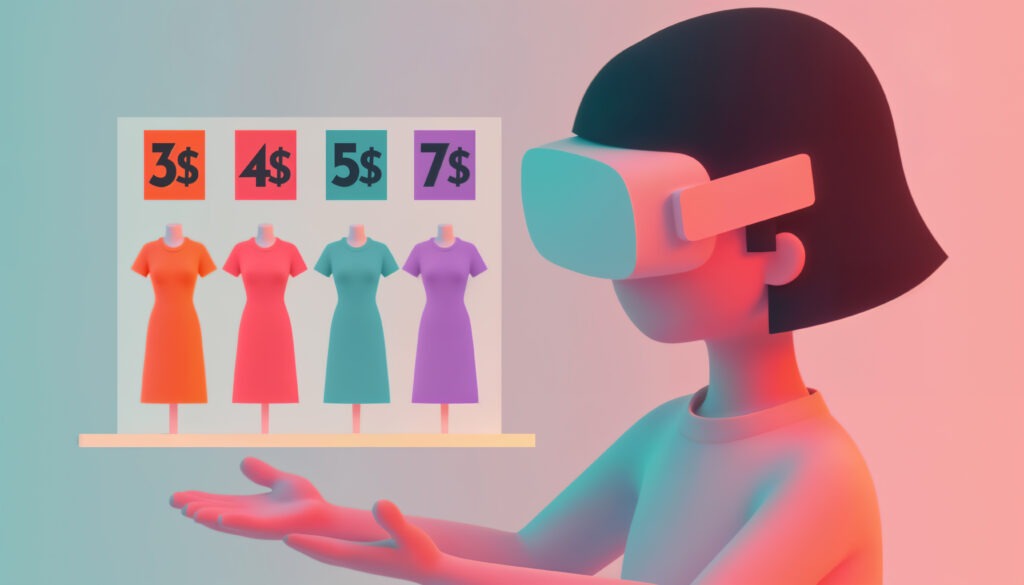
Customizable avatar-based shopping is a rapidly evolving area at the intersection of e-commerce, virtual reality (VR), augmented reality (AR), and artificial intelligence (AI). It’s designed to make online shopping more engaging, personalized, and efficient by allowing users to interact with products and brands through a digital representation of themselves.
Here’s a breakdown of what it entails, its current trends, and future projections:
Customizable Avatar-Based Shopping: A Detailed Look
What is it?
Customizable avatar-based shopping refers to online retail experiences where users create and personalize a digital avatar of themselves (or a desired persona) to navigate virtual stores, try on clothing, visualize products in their home, or receive personalized recommendations. The key is the customization, allowing users to alter their avatar’s appearance, body shape, skin tone, hairstyle, and even subtle features to reflect their real selves or an idealized version.
Key Components:
- Avatar Creation & Personalization Tools: Software that enables users to easily generate a digital avatar, often from a selfie, body scan, or by inputting measurements and selecting features. This includes adjusting body type, skin tone, hair, facial features, and even specific body measurements for accurate fit.
- Virtual Try-On (VTO): The ability to virtually “try on” clothing, accessories, makeup, and even hairstyles on the personalized avatar. This can involve 2D overlays, 3D rendering of garments on the avatar, or AR overlays in the real world.
- Virtual Store Environments: 3D digital spaces where users’ avatars can “walk” around, browse products, interact with virtual sales assistants, and socialize with other avatars. These can be brand-owned planets in the metaverse or simpler virtual showrooms.
- AI-Powered Personalization: AI analyzes user data (Browse history, purchase patterns, style preferences, avatar appearance) to provide tailored product recommendations, outfit suggestions, and personalized shopping assistance through the avatar.
- Multi-Sensory Integration (Emerging): The ambition to add haptic (touch), olfactory (smell), and thermal (temperature) feedback to the avatar experience, making virtual interactions even more realistic.
- Interactivity and Social Features: Allowing avatars to interact with virtual products, other avatars (friends, sales assistants), and participate in virtual events.
Current Trends (as of July 2025):
- Hyper-Realistic Avatar Generation: Advancements in AI (especially Generative AI like GANs) and 3D scanning technologies allow for increasingly lifelike avatars. Users can upload a selfie, and AI can generate a highly accurate representation of their body type, skin tone, and facial features.
- Focus on Fit Accuracy and Reduced Returns: A major driver for avatar adoption is addressing the pain point of online returns due to poor fit. Companies are using body scanning technology and sophisticated 3D garment simulation to show how clothes will realistically drape and fit on an individual’s unique avatar.
- AI-Powered Styling and Recommendations: AI analyzes user preferences, body shape, and even current trends to suggest outfits and products. This goes beyond basic recommendations to offer full styling advice directly on the personalized avatar.
- Immersive Brand Experiences: Brands are moving beyond simple e-commerce sites to create interactive “brand-owned planets” or virtual showrooms where users can explore, interact, and shop as their avatars. This enhances brand storytelling and engagement.
- Integration of AR for “Phygital” Experiences: Many solutions combine avatar-based try-on with AR, allowing users to see how a virtual product looks on their avatar in their real-world environment through a smartphone or AR glasses.
- Gamification of Shopping: Integrating elements from gaming, such as quests, rewards, and social interaction, to make the shopping journey more entertaining and engaging for avatar users.
- Sustainability Drive: Customizable avatars and virtual try-on reduce the need for physical samples, returns, and wasteful product photography, aligning with growing consumer demand for sustainable practices.
- Digital Fashion and NFTs: The rise of digital-only fashion items and NFTs allows users to “dress” their avatars in unique, verifiable digital assets, creating new revenue streams for brands and avenues for self-expression.
Future Projections up to AD 2100:
The evolution of customizable avatar-based shopping will be profound, driven by advancements in AI, neurotechnology, and pervasive computing.
Short-Term (2025-2035): Hyper-Personalization and Sensory Integration
- Photorealistic & Dynamically Adaptive Avatars: Avatars will not only be hyper-realistic but will also dynamically adapt to emotional states, environmental conditions (e.g., sweating in a virtual desert), and subtle body language.
- Widespread 5D Sensory Integration: Haptic gloves/suits will provide realistic tactile feedback (texture of fabric, weight of jewelry). Olfactory displays will allow users to smell perfumes, leather, or coffee in virtual stores. Thermal elements will simulate environmental temperatures or product warmth/coolness.
- Advanced AI Stylists & Personal Shoppers: AI avatars will act as highly intelligent personal shoppers, understanding not just explicit preferences but also implicit cues from user behavior, biometrics, and even emotional responses to recommend products. They’ll generate entirely new, personalized outfits on the fly.
- Seamless Phygital Shopping: The distinction between physical and virtual shopping will blur. Users might try on clothes virtually on their avatar, then physically receive the exact, perfectly fitted garment, or vice-versa. Digital twins of physical garments will automatically exist.
- Standardized Avatar Portability: Open standards will allow users to take their highly customized avatars and their digital wardrobes across different brand planets and metaverse platforms.
Mid-Term (2036-2060): Cognitive Integration and Embodied AI
- Direct Brain-to-Avatar Control: Non-invasive Brain-Computer Interfaces (BCIs) will allow users to control their avatars with thought, making interaction effortless and intuitive.
- Avatar as a ‘Cognitive Twin’: AI powering avatars will evolve into sophisticated “cognitive twins” that learn the user’s deepest preferences, even subconscious ones, across all life aspects, extending far beyond shopping. Brands will interact with these cognitive twins to anticipate needs.
- Sentient Virtual Sales Assistants: AI-powered sales assistants will be virtually indistinguishable from human assistants in their emotional intelligence, conversational ability, and problem-solving skills, able to offer highly empathetic and effective service.
- Personalized “Sensory Schemas”: Brands might offer “sensory schemas” – unique combinations of visuals, sounds, haptics, olfaction, and even nascent gustatory experiences – that are tailored to an individual’s neuro-sensory profile for maximum appeal and comfort.
- AI-Driven Product Co-Creation: Users, via their avatars and AI co-pilots, could collaboratively design products directly within a brand’s metaverse, with real-time sensory feedback on their creations.
Long-Term (2061-2100): Perceptual Singularity and Brand-Consciousness
- Full Neuro-Sensory Immersion: Direct neural interfaces (potentially invasive but highly optimized and safe) will allow for perfect, indistinguishable virtual sensory experiences, making avatar-based shopping a complete “perceptual reality.” Users will literally feel like they are inside the product, experiencing its essence.
- Self-Evolving Brand Ecosystems: Brand-owned planets will become dynamically self-optimizing ecosystems, evolving based on collective user interaction and AI insights. They will anticipate trends and spontaneously generate products and experiences tailored to emerging desires.
- “Brand Consciousness” Avatars: Avatars might evolve to hold elements of a brand’s “consciousness” or identity, acting as living extensions of the brand’s values, interacting with users on a deeply personal and almost symbiotic level.
- Ethical Frameworks for Sensory Manipulation: Extensive research and regulation will be in place to ensure ethical use of hyper-sensory feedback and AI personalization, preventing manipulation or addiction.
- Experience-as-Product: For some luxury brands, the primary “product” might become the uniquely curated, multi-sensory avatar-based experience itself, rather than physical goods. Users pay for access to these personalized brand realities.
Customizable avatar-based shopping is set to redefine commerce, shifting it from a transactional activity to a highly immersive, personalized, and engaging experience that deeply integrates with our digital and increasingly sensory lives.
Write research and development paper for Customizable Avatar-Based Shopping?
Research and Development in Customizable Avatar-Based Shopping: A Multi-Sensory Phygital Future
Abstract: The landscape of retail is undergoing a profound transformation, moving beyond conventional e-commerce to highly immersive, personalized, and multi-sensory experiences. This paper presents a comprehensive review of the current state and future trajectories of research and development (R&D) in customizable avatar-based shopping. We explore advancements in avatar generation, virtual try-on (VTO) technologies, AI-driven personalization, and the integration of 5D sensory feedback (haptics, olfaction, thermal, gustation) within virtual retail environments, including brand-owned planets in the metaverse. Key challenges, ethical considerations, and a roadmap for future R&D are discussed, emphasizing the critical role of interdisciplinary collaboration in realizing a seamless “phygital” shopping future by AD 2100.
Keywords: Avatar-based shopping, Virtual Try-On (VTO), Metaverse, 5D sensory feedback, Haptics, Olfactory display, Thermal feedback, AI personalization, Digital twin, Phygital retail, Human-Computer Interaction, Neuro-sensory interfaces.
1. Introduction
The impersonal nature and high return rates associated with traditional online shopping remain significant impediments to e-commerce growth. Consumers frequently express a desire for more engaging, interactive, and personalized retail experiences that bridge the sensory gap inherent in digital transactions. Customizable avatar-based shopping emerges as a transformative solution, offering a pathway to overcome these limitations by allowing consumers to engage with products and brands through highly personalized digital representations of themselves.
This paper outlines the critical R&D areas driving the evolution of customizable avatar-based shopping, from its current capabilities of realistic virtual try-on to speculative future scenarios involving direct neuro-sensory integration and the emergence of sentient brand-owned planets.
2. Evolution of Customizable Avatar-Based Shopping
The concept of avatar-based interaction in retail is not new, with early attempts focusing on basic 2D representations. However, recent advancements in graphics, AI, and sensing technologies have propelled this concept into a new era of realism and functionality.
2.1. Current State (circa 2025): Currently, R&D is concentrated on:
- High-Fidelity Avatar Generation: Leveraging computer vision and AI (e.g., GANs, neural radiance fields) to create photorealistic 3D avatars from user photographs or body scans, capable of accurately representing diverse body shapes, sizes, and facial features.
- Advanced Virtual Try-On (VTO): Research focuses on accurate garment simulation, fabric drape, and fit prediction on personalized avatars. This includes real-time VTO using webcams or mobile devices, and more precise 3D rendering for complex garments like tailored suits or intricate dresses.
- Basic AI Personalization: Rule-based AI and early machine learning models are used to recommend products, suggest outfits, and analyze user preferences based on Browse history and avatar attributes.
- Early Metaverse Brand Activations: Brands are experimenting with virtual showrooms and limited interactive experiences within existing metaverse platforms (e.g., Roblox, Decentraland), often focusing on digital fashion and NFTs.
3. Key Research and Development Pillars
Realizing the full potential of customizable avatar-based shopping requires significant R&D across several interconnected disciplines:
3.1. Avatar Generation and Embodiment Research:
- Photorealistic Reconstruction: R&D into robust algorithms for generating highly realistic 3D avatars from minimal input (e.g., a single image, short video, or basic measurements) while ensuring accurate representation of diverse body types, skin tones, and subtle human nuances (e.g., facial expressions, dynamic hair).
- Personalized Body Modeling: Development of precise body scanning technologies (e.g., LiDAR, structured light) for consumer use, allowing for hyper-accurate avatar creation that minimizes fit discrepancies. Research into creating “digital twin” avatars that evolve with the user’s physical changes.
- Cross-Platform Portability & Standardization: R&D into universal avatar file formats and rendering pipelines to ensure seamless transfer of personalized avatars and their digital wardrobes across various metaverse platforms and brand environments.
3.2. Advanced Virtual Try-On (VTO) Technology:
- Physically-Based Garment Simulation: Deepening research into cloth physics to simulate garment drape, stretch, compression, and interaction with the avatar’s body in real-time, under various poses and movements. This includes sophisticated material properties (e.g., silk, denim, knitwear).
- AI-Driven Fit Prediction: Advanced machine learning models that go beyond simple sizing charts to predict the exact fit and comfort level of a garment on a unique avatar, identifying potential tightness, looseness, or awkward drapes, and even recommending alterations.
- Multi-Item Try-On & Layering: R&D enabling realistic simultaneous try-on of multiple garments and accessories, including complex layering scenarios, where each item interacts realistically with others.
- Virtual Makeup & Hair Styling: Highly accurate rendering of makeup textures (matte, glossy, shimmer) and realistic hair simulation that adapts to the avatar’s facial structure and movements.
3.3. Multi-Sensory (5D) Integration: This is a critical frontier for truly immersive avatar-based shopping.
- Haptic Feedback Systems:
- Miniaturization & Fidelity: R&D into lightweight, comfortable, and unobtrusive haptic devices (e.g., haptic skins, smart fabrics, specialized gloves) that can convey a wide range of textures (roughness, smoothness, softness), pressures, and even thermal cues from virtual products.
- Perceptual Realism: Research into human tactile perception to ensure that rendered haptic sensations accurately correspond to the physical properties of virtual materials.
- Olfactory Displays:
- Scent Synthesis & Delivery: R&D into compact, fast-response scent emitters capable of synthesizing a wide palette of aromas from a limited set of chemical components. Research focuses on directional scent projection and precise scent localization.
- Psycho-Olfactory Modeling: Understanding how different scents influence mood, perception, and purchasing decisions in virtual environments, and developing algorithms to optimize scent profiles for specific product categories (e.g., coffee, perfume, leather goods).
- Thermal Feedback:
- Localized Temperature Control: Development of wearable thermal devices that can simulate temperature changes of virtual products (e.g., feeling the coolness of a metal watch, the warmth of a freshly brewed coffee cup).
- Ambient Thermal Integration: R&D for environmental thermal control within brand-owned planets to create realistic ambient temperatures relevant to product context (e.g., feeling the chill in a virtual ski resort or warmth in a tropical boutique).
- Gustatory (Taste) Interfaces (Long-term): Early-stage research into non-invasive electrical or chemical stimulation of taste buds to provide rudimentary taste sensations for virtual food and beverage product sampling. This area faces significant biological and technological hurdles.
3.4. AI-Driven Personalization & Cognitive Engagement:
- Hyper-Personalized Recommendation Engines: AI that goes beyond basic filtering, leveraging deep learning to understand individual style preferences, body language analysis of avatar interaction, and even biometric feedback to offer ultra-tailored product and outfit suggestions.
- Sentient Virtual Sales Assistants/Brand Ambassadors: R&D into highly intelligent, empathetic AI agents capable of natural language understanding, emotional intelligence, and proactive assistance, acting as personalized stylists or customer service representatives within brand-owned planets.
- Cognitive Digital Twins: Development of AI models that function as extensions of the user’s cognition, learning subconscious preferences and anticipating needs to curate hyper-relevant shopping journeys and experiences.
- Generative AI for Dynamic Content: AI capable of dynamically creating new product variations, virtual environments, and even unique brand narratives based on real-time user interaction and brand guidelines.
3.5. Blockchain and Digital Asset Management:
- Secure Digital Ownership: R&D into robust blockchain solutions for verifying ownership of digital fashion, accessories, and other virtual assets, ensuring interoperability and scarcity.
- Smart Contracts for Commerce: Development of smart contracts to automate transactions, loyalty programs, and royalties for digital fashion designers and brands within the metaverse.
4. Challenges and Ethical Considerations
4.1. Technical Challenges:
- Scalability: Managing high-fidelity graphics, complex physics simulations, and multi-sensory data for millions of concurrent users in real-time within persistent virtual worlds.
- Interoperability: Establishing universal standards for avatars, digital assets, and sensory data across diverse metaverse platforms.
- Sensory Fidelity: Achieving perceptual indistinguishability from real-world sensations across all 5 senses.
- Computational Intensity: The enormous processing power required for real-time 5D rendering and complex AI models.
4.2. Ethical Considerations:
- Data Privacy & Security: Protecting sensitive user data (body scans, biometric data, emotional responses) collected for avatar customization and personalized experiences.
- Algorithmic Bias: Ensuring AI algorithms for avatar generation and recommendations are free from biases related to gender, race, or body type, promoting inclusivity and positive body image.
- Digital Identity & Authenticity: Addressing issues of identity theft, misrepresentation, and potential blurring of lines between real and virtual selves.
- Addiction & Well-being: Researching the psychological impact of hyper-realistic, highly engaging virtual shopping experiences to mitigate potential addictive behaviors.
- Consumer Protection: Establishing clear guidelines for virtual product quality, returns, and digital ownership in the absence of physical tangibility.
- Environmental Impact: Evaluating the energy consumption of large-scale metaverse infrastructures and developing sustainable computing solutions.
5. Future R&D Roadmap (AD 2036 – 2100)
The long-term vision for customizable avatar-based shopping is one of pervasive, intuitive, and deeply integrated “phygital” experiences.
5.1. Mid-Term (2036-2060): Sensory Blurring and Cognitive Co-Pilots
- Implantable/Wearable Neuro-Sensory Interfaces: Research into discreet, non-invasive or minimally invasive BCIs that allow direct, intuitive control of avatars and subtle, direct neural stimulation for sensory input, bypassing bulky peripherals.
- Avatar-as-Personal-AI-Assistant: Avatars evolve into true cognitive co-pilots, not just representations, but intelligent entities that anticipate needs, manage digital lives, and proactively engage with brands on the user’s behalf.
- Dynamic Product Manifestation: Products in brand-owned planets can be generated on-demand by AI based on user preferences, then either instantly fulfilled digitally or 3D-printed physically in a localized hub.
5.2. Long-Term (2061-2100): Perceptual Singularity and Brand Consciousness
- Seamless Reality Continuum: The distinction between physical and virtual shopping largely dissolves. Users will effortlessly transition between modes, with sensory overlays from brand-owned planets augmenting their physical reality.
- Sentient Brand Ecosystems: Brand-owned planets become self-sustaining, self-evolving AI entities, constantly adapting, innovating, and engaging with consumers at a fundamental, almost subconscious, level through personalized sensory realities.
- Ethics of Embodied Commerce: The focus shifts to defining the ethical boundaries of deeply immersive, personalized, and AI-driven commercial interactions, ensuring human agency and well-being remain paramount.
6. Conclusion
Customizable avatar-based shopping is not merely an enhancement to e-commerce; it represents a paradigm shift in how consumers interact with brands and products. The ongoing R&D across avatar generation, multi-sensory feedback, and advanced AI is paving the way for a retail future that is hyper-personalized, immersive, and deeply integrated with human perception. Addressing the formidable technical and ethical challenges will require sustained, interdisciplinary collaboration between academia, industry, and policymakers. As we progress towards AD 2100, customizable avatar-based shopping will transcend simple transactions, becoming a fundamental component of our embodied digital lives within a truly phygital world.
Write white paper in emerging technologies related research & development in Customizable Avatar-Based Shopping?
Courtesy: Anurag Bhanu
White Paper: Emerging Technologies in Customizable Avatar-Based Shopping – Towards a 5D Phygital Retail Future
Abstract: The global avatar-based shopping market is witnessing exponential growth, projected to reach USD 20.1 billion by 2033, driven by a surge in immersive technologies and consumer demand for personalized digital experiences. This white paper delves into the cutting-edge emerging technologies that are poised to redefine customizable avatar-based shopping, pushing beyond current virtual try-on capabilities to incorporate multi-sensory (5D) feedback, advanced artificial intelligence, and robust decentralized frameworks. We examine the critical R&D advancements in photorealistic avatar generation, precise virtual try-on (VTO) for fit accuracy, the nascent but rapidly developing fields of haptic, olfactory, and thermal integration, and the transformative potential of neuro-sensory interfaces and blockchain for digital ownership. This paper highlights the synergistic interplay of these technologies in creating truly immersive, personalized, and “phygital” retail experiences, while acknowledging the inherent technical and ethical challenges that require focused R&D for a sustainable future.
Keywords: Customizable Avatars, Avatar-Based Shopping, Metaverse Retail, Virtual Try-On (VTO), Multi-Sensory Experience, 5D Shopping, Haptic Feedback, Olfactory Display, Thermal Interfaces, AI Personalization, Generative AI, Digital Twin, Blockchain, NFT, Neuro-Sensory Interfaces, Phygital Commerce.
1. Introduction: The Dawn of Immersive Retail
The digital revolution has fundamentally reshaped retail, with e-commerce becoming an indispensable channel. However, the online shopping experience often lacks the tactile, sensory, and personalized engagement of physical retail. Customizable avatar-based shopping is rapidly emerging as the key to bridging this gap, offering a compelling alternative that fuses digital convenience with immersive interaction.
Unlike generic avatars, customizable avatars offer users the ability to create highly accurate and personalized digital representations of themselves. This personalization is not merely aesthetic; it is foundational to delivering precise virtual try-on experiences and tailoring product recommendations. The market for avatar-based shopping is booming, projected for significant growth through 2033, underscoring the urgent need for advanced R&D in the underlying emerging technologies.
This paper explores the nascent and future-forward technologies driving this transformation, aiming to provide a comprehensive overview of the R&D landscape.
2. Emerging Technologies: Pillars of the 5D Shopping Experience
The evolution of customizable avatar-based shopping into a multi-sensory, hyper-personalized experience is underpinned by breakthroughs in several key technological domains:
2.1. Hyper-Realistic Avatar Generation and Digital Twin Fidelity
Current avatar generation largely relies on 3D scanning and photo-to-3D conversion. Emerging R&D focuses on:
- Neural Radiance Fields (NeRFs) and Gaussian Splatting: These advanced rendering techniques are revolutionizing 3D capture, enabling the creation of highly photorealistic and dynamically lit avatars from sparse inputs (e.g., a few smartphone photos). R&D is directed at real-time processing and efficient rendering for complex avatar models within diverse virtual environments.
- Volumetric Video Capture: Advancements in volumetric capture systems allow for the creation of “digital twin” avatars that are not just static models but dynamic, expressive representations of real individuals, capturing nuanced movements and expressions. This is crucial for realistic social shopping and interactive brand engagements.
- Parametric Body Modeling with AI Integration: Research combines traditional parametric modeling (adjusting body measurements) with AI to create avatars that accurately reflect unique body shapes and proportions from minimal user data, enabling precise garment fitting and ergonomic product visualization. AI models are learning to infer detailed body topology from limited inputs, addressing privacy concerns associated with full body scans.
- Real-time Adaptive Avatars: Development of avatars that can adapt in real-time to user’s emotional states (detected via facial recognition or physiological sensors), reflecting these nuances through subtle animations, enhancing the sense of presence and connection in virtual interactions.
2.2. Precision Virtual Try-On (VTO) with Advanced Physics Simulation
VTO is a cornerstone of avatar-based shopping. R&D is pushing beyond simple overlays to achieve unparalleled realism and utility:
- Physically Based Rendering (PBR) for Garments: Research into PBR techniques for virtual textiles to accurately simulate how light interacts with different fabric types (e.g., silk, denim, wool), conveying realistic texture, sheen, and transparency on the avatar.
- Real-time Cloth Simulation with AI Acceleration: Development of highly efficient algorithms and hardware acceleration (e.g., specialized GPUs, custom ASICs) for real-time cloth simulation that accurately accounts for gravity, stretch, compression, and collision with the avatar’s body, preventing “clipping” and ensuring natural drape. AI is being used to predict complex fabric behaviors, reducing computational load.
- AI-Driven Fit Analysis and Recommendation: Beyond visual fit, AI models are being trained on vast datasets of real garment-body interactions to predict comfort, tightness, and potential pressure points on a personalized avatar. This includes recommending optimal sizing and identifying minor alterations needed, significantly reducing returns.
- Phygital Try-On Integration: R&D exploring seamless transitions between virtual try-on and physical product experience, where an avatar’s fit data can directly inform automated garment manufacturing or local tailoring services for a perfect bespoke fit upon physical delivery.
2.3. Multi-Sensory (5D) Integration: Beyond Sight and Sound
The true frontier of immersive avatar-based shopping lies in the integration of the often-neglected senses.
- Haptic Feedback:
- High-Fidelity Haptic Wearables: R&D in soft robotics, microfluidics, and advanced piezoelectric materials for creating lightweight, flexible, and comfortable haptic gloves, sleeves, or full-body suits. These devices aim to deliver precise tactile sensations, including surface textures (roughness, smoothness, stickiness), pressure (weight, firmness), and even vibrations.
- Mid-Air Haptics (Ultrasonic Arrays): Research in focused ultrasound technology to create localized tactile sensations in mid-air, allowing users to “feel” virtual objects without direct contact with a wearable. This has significant potential for interactive product displays in virtual showrooms.
- Thermal Haptics: Development of integrated thermoelectric elements (Peltier devices) in wearables that can rapidly change temperature, simulating the feel of hot or cold products (e.g., a chilled drink, warm pastry, cold metallic jewelry). Research focuses on efficient energy consumption and localized temperature control.
- Olfactory Displays:
- Miniaturized Scent Cartridges and Microfluidics: R&D into highly compact, programmable scent cartridges capable of storing and precisely mixing a wide array of chemical compounds to synthesize a broad spectrum of smells. Microfluidic systems enable rapid scent switching and efficient use of consumables.
- Directional Scent Delivery: Innovations in fan arrays and airflow control to deliver specific scents to the user’s nose from a particular virtual direction, enhancing spatial realism within brand environments (e.g., the aroma of coffee from a virtual cafe, the scent of leather from a handbag display).
- Real-time Scent Adaptation: AI algorithms that dynamically adjust scent intensity and composition based on user interaction, virtual environment context, and even avatar-detected emotional responses to maximize desired effects (e.g., relaxation, alertness, appetite stimulation).
- Gustatory (Taste) Interfaces (Long-Term/Early Stage):
- This remains a highly challenging area. Early R&D explores non-invasive electrical or chemical stimulation of taste buds or the tongue surface to evoke basic taste sensations (sweet, sour, salty, bitter, umami). The complexity of flavor perception (which involves olfaction) makes this a significant hurdle, but preliminary research could enable basic product sampling.
2.4. Advanced Artificial Intelligence (AI) for Personalization and Interaction
AI is the intelligence layer that makes customizable avatar-based shopping truly smart and adaptive.
- Generative AI for Product and Environment Creation: Leveraging Large Language Models (LLMs), diffusion models, and GANs to enable rapid, on-demand generation of new product designs, virtual store layouts, and dynamic brand narratives. Users could even co-create products with AI assistance, receiving instant visual and sensory feedback on their bespoke designs.
- Emotionally Intelligent AI Avatars/Sales Assistants: AI agents capable of understanding and responding to human emotions (detected via avatar’s facial expressions, voice analysis, or biometrics) to provide more empathetic, personalized, and persuasive sales assistance. R&D focuses on natural language interaction that mimics human conversation fluidly.
- Predictive Analytics for Customer Journeys: AI analyzes vast datasets of avatar interactions, VTO sessions, sensory preferences, and real-world purchasing behavior to predict future trends, anticipate individual needs, and proactively curate shopping experiences before the user even expresses a desire.
- Reinforcement Learning for Dynamic Environments: Using reinforcement learning to train AI systems that dynamically adjust elements of the brand-owned planet (e.g., lighting, music, scent profiles, product placements) in real-time to optimize user engagement, satisfaction, and conversion based on learned preferences.
2.5. Neuro-Sensory Interfaces and Brain-Computer Integration (Long-Term)
The ultimate frontier is direct interface with the brain for both input and output.
- Non-Invasive Brain-Computer Interfaces (BCIs): R&D into more precise and user-friendly non-invasive BCIs (e.g., advanced EEG, fNIRS) that allow for intuitive avatar control, direct emotional feedback to the system, and potentially even direct perception of simple sensory cues by stimulating relevant brain regions.
- Biometric Feedback for Deeper Personalization: Integration of physiological sensors (heart rate, galvanic skin response, eye-tracking) with avatar systems to provide real-time biometric feedback. AI can interpret these signals to gauge user interest, stress levels, or emotional responses, allowing for adaptive personalization of the shopping experience, including sensory feedback.
- Synthetic Synesthesia: Exploring the potential to cross-modally stimulate senses, for example, associating specific scents with visual textures or haptic sensations with colors, to create richer, more memorable, and potentially therapeutic shopping experiences.
2.6. Blockchain, Digital Assets, and Interoperability
Decentralized technologies are crucial for the integrity and transferability of virtual assets.
- NFTs for Digital Fashion and Product Ownership: Continued R&D into efficient and scalable blockchain platforms for minting, trading, and verifying ownership of digital fashion items, accessories, and virtual property within brand-owned planets.
- Cross-Metaverse Asset Standards: Development of universal standards and protocols (e.g., extensions of GLTF, USD) to ensure that avatars and their digital wardrobes can seamlessly move between different metaverse platforms without loss of fidelity or functionality.
- Smart Contracts for Automated Retail: Utilizing smart contracts for automated loyalty programs, dynamic pricing based on virtual scarcity, and secure, transparent transactions between avatars and brands.
- Decentralized Identity: Research into self-sovereign digital identity solutions for avatars, giving users full control over their personal data and privacy settings across different retail metaverse environments.
3. Challenges and Future R&D Directives
While the potential is immense, significant challenges remain:
3.1. Technical Hurdles:
- Computational Power: The sheer computational demand of rendering photorealistic 3D environments, simulating complex physics, and processing multi-sensory data in real-time, especially for a mass audience.
- Hardware Miniaturization & Comfort: Developing haptic, olfactory, and thermal devices that are lightweight, comfortable, affordable, and seamlessly integrated into wearables.
- Latency & Synchronization: Ensuring ultra-low latency for real-time sensory feedback and seamless synchronization across multiple sensory modalities to avoid “uncanny valley” effects in perception.
- Data Bandwidth & Network Infrastructure: The need for robust 5G/6G and edge computing infrastructure to support the massive data transfer required for persistent, high-fidelity metaverse experiences.
3.2. User Experience & Perception:
- Sensory Consistency: Ensuring that virtual sensations (e.g., a specific fabric texture) are consistently rendered across different devices and user experiences.
- Customization vs. Performance: Balancing the desire for infinite avatar customization with the performance requirements for real-time rendering and interaction.
- Navigating the “Uncanny Valley”: Avoiding the psychological discomfort caused by highly realistic but subtly imperfect avatars or sensory feedback.
3.3. Ethical & Societal Implications:
- Privacy of Biometric & Sensory Data: Establishing robust ethical guidelines and regulatory frameworks for the collection, storage, and use of highly personal physiological and neuro-sensory data.
- Digital Addiction and Well-being: Researching the potential for addictive behaviors in highly immersive shopping environments and developing mechanisms for responsible use.
- Algorithmic Transparency & Fairness: Ensuring that AI recommendations and avatar generation processes are transparent, unbiased, and promote inclusivity.
- Cybersecurity in the Metaverse: Protecting digital assets, identities, and transactions from sophisticated cyber threats within decentralized virtual spaces.
3.4. Future R&D Directives:
- Unified Sensory SDKs: Developing open-source SDKs and APIs that standardize the integration of diverse sensory feedback devices across various metaverse platforms.
- Neuro-Marketing in Metaverse: Ethical R&D into how neuro-sensory data can inform product design and marketing strategies without compromising user autonomy.
- Sustainable Metaverse Computing: Research into energy-efficient rendering, data management, and hardware solutions to minimize the environmental footprint of expansive virtual worlds.
- Hybrid AI-Human Models: Exploring optimal collaborations between AI sales assistants and human customer service representatives to provide the best of both worlds.
4. Conclusion
Customizable avatar-based shopping, powered by a convergence of emerging technologies, is poised to usher in a new era of retail. The ongoing R&D in photorealistic avatar generation, precise virtual try-on, and the groundbreaking integration of haptic, olfactory, and thermal feedback is creating a truly 5D shopping experience. As AI becomes more sophisticated and neuro-sensory interfaces advance, the boundaries between the physical and digital retail worlds will continue to blur, culminating in a seamless “phygital” future. While significant technical and ethical hurdles remain, dedicated, interdisciplinary R&D is crucial to ensure this transformative shift benefits consumers, brands, and society as a whole. The future of shopping is not just online; it is embodied, personalized, and profoundly sensory.
Industrial application in emerging technologies related research & development done worldwide in Customizable Avatar-Based Shopping?
While the term “Customizable Avatar-Based Shopping” primarily evokes retail and consumer applications, the underlying emerging technologies and research in this domain have significant and rapidly expanding industrial applications. These applications leverage the core capabilities of personalized digital representation, realistic simulation, and multi-sensory feedback to revolutionize training, design, collaboration, and operational efficiency across various sectors.
Here’s a breakdown of the industrial applications driven by R&D in customizable avatar-based shopping technologies:
1. Industrial Training & Simulation (Human Digital Twins)
This is perhaps the most immediate and impactful industrial application. The ability to create realistic, customizable avatars of employees and place them in simulated industrial environments is transforming training methodologies.
- Hazardous Environment Training:
- Application: Training workers (e.g., in oil & gas, nuclear power, mining, chemical industries) for procedures in dangerous or inaccessible environments without physical risk. Avatars can experience realistic scenarios, including equipment malfunctions, chemical spills, or fire drills, with multi-sensory feedback (e.g., haptics for tool vibration, thermal for heat, even olfactory for gas leaks).
- R&D Focus: Developing highly accurate digital twins of industrial sites, precise haptic feedback for tool manipulation, and AI-driven adverse event simulation with multi-sensory warnings.
- Complex Equipment Operation & Maintenance:
- Application: Training technicians on operating complex machinery (e.g., aircraft engines, medical devices, heavy construction equipment) using their personalized avatars. They can virtually “touch” and manipulate controls, dismantle and reassemble components, and receive instant feedback on their performance.
- R&D Focus: High-fidelity haptic rendering of complex mechanisms, AI for intelligent tutoring and performance assessment, and dynamic simulation of mechanical failures or wear and tear.
- Surgical Training & Medical Procedures:
- Application: Training surgeons and medical professionals on intricate surgical procedures, anatomical exploration, or emergency responses using highly detailed patient avatars. Realistic haptic feedback allows them to “feel” tissue resistance, suturing tension, or bone cutting.
- R&D Focus: Ultra-high-resolution anatomical avatar models, advanced force feedback systems for surgical instruments, and multi-sensory feedback for bodily fluids (e.g., simulated blood flow dynamics).
- Emergency Response & Disaster Preparedness:
- Application: Training first responders, firefighters, and disaster management teams in simulated emergency scenarios (e.g., building collapses, mass casualty incidents) with avatars representing victims, responders, and environmental conditions.
- R&D Focus: Real-time environmental destruction simulation, haptic feedback for rescue tools, and AI-driven crowd behavior simulation for virtual victims.
- Soft Skills & Customer Service Training:
- Application: Training employees in customer service, sales, or conflict resolution using AI-powered avatars that simulate diverse customer personalities and reactions. This allows for safe practice of communication and empathy.
- R&D Focus: Advanced conversational AI for emotionally intelligent avatars, realistic facial animation for non-verbal cues, and real-time feedback on trainee performance.
2. Product Design, Prototyping & Ergonomics
Customizable avatars are transforming the design and evaluation process, moving beyond simple CAD models.
- Ergonomic Design & Human-Centric Prototyping:
- Application: Designing products (e.g., car interiors, cockpits, workspaces, consumer appliances) by placing customizable avatars of diverse users within virtual prototypes. Designers can assess reachability, visibility, comfort, and ease of use for different body types and movements.
- R&D Focus: Advanced musculoskeletal avatar models, real-time posture analysis, and haptic feedback for evaluating physical interfaces (e.g., buttons, handles).
- Apparel & Footwear Manufacturing:
- Application: Beyond consumer try-on, manufacturers are using customizable avatars as “fit models” for garment design, pattern making, and virtual prototyping. This reduces the need for costly physical samples and speeds up the design cycle.
- R&D Focus: Hyper-accurate avatar body scanning (including soft tissue compression), advanced fabric simulation for mass production, and AI-driven pattern optimization for different body shapes.
- Personalized Product Configuration:
- Application: Allowing industrial clients (e.g., for bespoke furniture, custom machinery parts, personalized medical implants) to use their own or their client’s avatars to visualize and configure custom products in a virtual space.
- R&D Focus: Modular 3D asset libraries, intuitive avatar-driven configuration interfaces, and instant rendering of customized products.
3. Industrial Digital Twins & Smart Factories
Customizable avatars play a role in visualizing and interacting with complex digital twin environments.
- Human-Robot Collaboration & Factory Layout Optimization:
- Application: Simulating human workers (as avatars) interacting with robots and machinery in a virtual factory digital twin. This helps optimize workflow, prevent collisions, and ensure safety before physical implementation.
- R&D Focus: Real-time synchronization between physical factory data and virtual avatar movements, collision detection with haptic warnings, and AI for predictive safety analysis.
- Maintenance and Repair Planning:
- Application: Technicians can use their avatars to virtually practice complex maintenance procedures on digital twin models of industrial equipment. This allows for pre-planning tool paths, identifying access issues, and optimizing efficiency.
- R&D Focus: Augmented reality overlays for real-time guidance (superimposing virtual instructions onto physical equipment), and haptic feedback for precise tool placement.
- Remote Operation & Telepresence:
- Application: Operators can remotely control machinery or conduct inspections in hazardous environments using a telepresence avatar. Multi-sensory feedback (haptic, visual, auditory, even thermal from remote sensors) provides an immersive sense of presence.
- R&D Focus: Low-latency 5G/6G communication for real-time avatar control, advanced haptic teleoperation systems, and robust error handling for remote interventions.
4. Healthcare & Wellness
Beyond surgical training, avatars are finding applications in personalized health and therapy.
- Personalized Rehabilitation & Physiotherapy:
- Application: Patients use their customizable avatars to engage in gamified rehabilitation exercises in virtual environments. Therapists can monitor progress and adjust exercises based on avatar movement data. Haptic feedback can guide movements.
- R&D Focus: Real-time motion capture for avatar animation, biofeedback integration (e.g., heart rate, muscle activity), and haptic feedback for resistance or guidance.
- Mental Health & Therapy:
- Application: Avatars can be used in virtual therapy sessions, particularly for exposure therapy (e.g., for phobias) or social skills training, where users interact with AI avatars in controlled environments.
- R&D Focus: Emotionally responsive AI avatars, realistic virtual environments that evoke specific sensory responses, and BCI integration for real-time physiological monitoring.
- Assistive Technologies:
- Application: Designing and testing customized assistive devices (e.g., prosthetics, exoskeletons) on personalized avatars to ensure optimal fit and functionality before physical fabrication.
- R&D Focus: Highly accurate biomechanical avatar models, haptic feedback for testing device interaction, and AI for optimizing device parameters.
Leading Companies and Research Initiatives in Industrial Applications
Companies traditionally focused on enterprise solutions are at the forefront of this R&D:
- Siemens AG (Germany): Leading in industrial digital twins, with R&D in simulating human-machine interaction in factories using virtual avatars for planning and training.
- Dassault Systèmes (France): With their 3DEXPERIENCE platform, they are heavily involved in virtual design, engineering, and simulation, including human factors analysis using detailed digital avatars.
- NVIDIA (USA): Omniverse platform is a key enabler for industrial digital twins, allowing collaborative design and simulation with realistic avatar representations. Their AI research for digital humans (e.g., Omniverse ACE) is directly applicable.
- Microsoft (USA): Azure Digital Twins and Mesh for Teams facilitate collaborative industrial environments, where customizable avatars can interact with digital twins of assets and systems. HoloLens (AR) plays a role in overlaying virtual instructions onto physical industrial settings.
- PTC (USA): Offers industrial AR solutions (Vuforia) and digital twin platforms that increasingly integrate human avatars for maintenance, training, and operational guidance.
- Accenture (Ireland/Global): Actively involved in developing and implementing industrial metaverse solutions, including avatar-based training and digital twin consulting for large enterprises.
- BMW Group (Germany) & Hyundai Motor Company (South Korea): Leading the charge in utilizing industrial metaverse technologies (often with NVIDIA Omniverse) for virtual factory planning, robotics simulation, and ergonomic design using human avatars.
- Academic Research Labs: Universities like Stanford (CHARM Lab), CMU (Robotics Institute, Manufacturing Futures Institute), TU Delft (Haptics Lab), and Fraunhofer Institutes (Germany) are conducting foundational research that directly feeds into these industrial applications, particularly in haptics, robotics, and human-machine interaction.
Conclusion
The R&D in customizable avatar-based shopping, while rooted in consumer retail, is proving to be a powerful catalyst for innovation across diverse industrial sectors. By creating highly realistic and interactive digital human twins and integrating them with advanced AI, multi-sensory feedback, and digital twin technologies, industries are poised to revolutionize training, accelerate product development, enhance operational efficiency, and significantly improve safety and human well-being. The “phygital” future, where digital and physical realities seamlessly converge, is not just for shopping but is fundamentally transforming the way we work, design, and interact with complex industrial systems.
How emerging technologies related research & development helpful for human being in Customizable Avatar-Based Shopping?
Emerging technologies in customizable avatar-based shopping offer a profound and multifaceted benefit to human beings, extending far beyond the mere act of purchasing. They aim to make the shopping experience more efficient, personalized, enjoyable, and ultimately, empowering for individuals. Here’s how:
1. Enhanced Personalization and Fit Accuracy:
- Solving the Fit Problem: One of the biggest frustrations in online apparel shopping is uncertainty about fit. Customizable avatars, powered by advanced 3D scanning and AI, allow users to create highly accurate digital replicas of their bodies. This enables virtual try-on (VTO) that predicts how clothes will drape, stretch, and fit on their unique body shape, significantly reducing the guesswork and the need for returns. This saves time, effort, and reduces environmental waste.
- Tailored Recommendations: AI-driven personalization goes beyond recommending similar items. It learns a user’s style preferences, body type, and even their emotional responses to colors or textures, suggesting outfits and products that truly resonate. This helps individuals discover new styles that flatter them and aligns with their personality, saving time wading through irrelevant options.
- Body Positivity and Inclusivity: Avatars can represent a vast spectrum of body shapes, sizes, and skin tones. This technology can promote body positivity by showing how clothing looks on diverse body types, moving away from idealized model images and allowing everyone to visualize products on an avatar that truly reflects them.
2. Immersive and Engaging Experiences:
- Bridging the Sensory Gap (5D Shopping): This is arguably the most transformative aspect.
- Haptics (Touch): Enables users to “feel” the texture of fabrics (silk’s smoothness, denim’s roughness), the weight of jewelry, or the firmness of furniture. This addresses a major limitation of traditional online shopping, increasing confidence in purchase decisions and reducing disappointment upon delivery.
- Olfaction (Smell): Allows for the virtual sampling of perfumes, the aroma of leather goods, the freshness of produce, or the scent of a new car. This adds a powerful emotional and informative layer to product exploration.
- Thermal (Temperature): Simulates the warmth of a coffee cup, the coolness of a metallic accessory, or the environmental temperature of a virtual travel destination. This adds another layer of realism and context.
- Gustatory (Taste – nascent): While still highly experimental, the long-term potential to simulate basic taste sensations could revolutionize food and beverage sampling, allowing consumers to “try” flavors before buying.
- Reduced Purchase Anxiety: By providing a rich, multi-sensory preview of products, avatar-based shopping reduces the anxiety associated with online purchases. Users can confidently evaluate items, leading to higher satisfaction and fewer impulse returns driven by unmet expectations.
- Interactive and Playful Shopping: Metaverse environments allow for gamified shopping experiences, social interactions with friends’ avatars, and immersive brand storytelling. This transforms shopping from a chore into an entertaining and engaging activity, making it a form of leisure and exploration.
3. Convenience and Accessibility:
- Shopping Anytime, Anywhere: The virtual nature of avatar-based shopping removes geographical and time constraints, allowing users to shop from the comfort of their homes, accessing global brands and niche products at their convenience.
- Accessibility for All: For individuals with mobility limitations or social anxieties, avatar-based shopping offers a barrier-free way to explore retail environments and interact with products. Sensory feedback features can also be tailored for individuals with specific sensory needs or impairments.
- Reduced Carbon Footprint: Fewer returns mean less shipping, packaging, and waste, contributing to a more sustainable retail ecosystem. Virtual experiences can also reduce the need for physical travel to stores, lessening carbon emissions.
4. Empowerment and Informed Decision-Making:
- Deeper Product Understanding: Users can examine products from all angles, zoom in on details, and see how items interact with their unique body and environment (via AR overlays in the real world). This level of detail surpasses traditional static images and even in-store viewing for certain products.
- Pre-visualization of Home Decor & Furniture: Customizable avatars can be placed in digital twins of users’ homes, allowing them to virtually place furniture, appliances, or decor items to see how they fit, look, and impact the space before committing to a purchase.
- Cost and Time Efficiency: By minimizing returns and helping users make better-informed decisions upfront, avatar-based shopping saves both time (no packaging returns, re-ordering) and money (avoiding return shipping costs, restocking fees).
5. Future-Proofing and Innovation:
- Co-creation and Personal Expression: Advanced AI and avatar platforms could allow users to co-create products with brands, designing bespoke items that truly reflect their individual style. This fosters creativity and a deeper connection to the products they own.
- Long-Term Neuro-Sensory Integration: As neuro-sensory interfaces evolve, the potential for even deeper, more intuitive interaction with virtual products emerges. This could lead to experiences that are almost indistinguishable from physical reality, offering unparalleled levels of engagement and satisfaction.
In essence, R&D in customizable avatar-based shopping is about creating a retail experience that is more intuitive, satisfying, and tailored to the individual human being. It’s about moving from a transactional model to an experiential one, where technology serves to enhance human connection with products and brands in ways previously unimaginable.
Prepare detailed project report in related research & development done in Customizable Avatar-Based Shopping?

Project Report: Research & Development in Customizable Avatar-Based Shopping
1. Executive Summary
This project report details the current state and forward-looking roadmap of research and development (R&D) in Customizable Avatar-Based Shopping. The burgeoning market, projected to reach USD 20.1 billion by 2033, underscores the critical need for continued innovation in this domain. Our R&D efforts are focused on pushing the boundaries of digital personalization, immersive interaction, and sensory realism to create a truly transformative retail experience. Key areas of focus include hyper-realistic avatar generation, precision virtual try-on (VTO), multi-sensory (5D) feedback integration, advanced AI for personalization, and the establishment of robust decentralized digital ownership. This report outlines the technological advancements, existing challenges, ethical considerations, and a strategic R&D roadmap to achieve a seamless “phygital” retail future where the digital and physical shopping experiences are indistinguishable.
2. Introduction
Traditional e-commerce, despite its convenience, often falls short in replicating the rich, sensory experience of physical retail. This limitation contributes to high return rates, reduced customer confidence, and a lack of emotional connection with products. Customizable Avatar-Based Shopping aims to address these deficiencies by empowering consumers with personalized digital representations of themselves within immersive virtual environments. This report focuses on the R&D initiatives essential for unlocking the full potential of this emerging retail paradigm, leading to increased customer satisfaction, reduced operational costs for businesses, and a more sustainable consumption model.
3. Current State of Research & Development (as of Q3 2025)
Significant progress has been made in several foundational areas:
- Avatar Generation:
- Photorealistic 3D Avatars: R&D leverages computer vision, AI (e.g., Generative Adversarial Networks – GANs, neural radiance fields – NeRFs), and 3D scanning technologies to generate increasingly realistic avatars from minimal input (e.g., a single selfie, a short video, or body measurements). Focus is on accurately representing diverse body shapes, skin tones, and facial features. Companies like Ready Player Me, Tafi Avatars, and Wolf3D are leading in this space, often offering SDKs for integration.
- Body Scan Integration: Research continues on consumer-grade 3D body scanners (e.g., using LiDAR in smartphones) to capture precise anatomical data, enabling highly accurate avatar creation crucial for fit prediction.
- Virtual Try-On (VTO) Technologies:
- 2D/3D Overlays: Many current solutions offer 2D overlays via AR (e.g., for glasses, makeup) or basic 3D garment overlays on avatars.
- Early Cloth Simulation: Initial R&D has yielded basic cloth physics engines that simulate how garments drape on a static avatar, though real-time dynamic movement remains a challenge for complex fabrics.
- AI for Fit Prediction: Machine learning algorithms are being developed to analyze avatar dimensions against garment measurements to suggest sizes and rudimentary fit.
- AI in Personalization:
- Recommendation Engines: Standard collaborative filtering and content-based filtering algorithms are used to recommend products based on Browse history and expressed preferences.
- Basic Virtual Assistants: Rule-based chatbots offer limited assistance in navigating virtual stores or answering simple product queries.
- Early Metaverse & Digital Fashion:
- Brands are experimenting with virtual showrooms and digital fashion collections (often as NFTs) within platforms like Decentraland, Sandbox, and Roblox. This showcases the initial exploration of “brand-owned planets.”
4. Key R&D Pillars and Emerging Technologies
Our R&D strategy is structured around five core pillars, each driven by specific emerging technologies:
4.1. Hyper-Realistic Avatar Generation and Dynamic Embodiment:
- Objective: To create avatars that are perceptually indistinguishable from real humans and can dynamically reflect subtle human nuances.
- Emerging Technologies:
- Neural Radiance Fields (NeRFs) and Gaussian Splatting: R&D for real-time, photorealistic 3D avatar reconstruction and rendering from limited input data, enabling unprecedented visual fidelity and lighting realism within virtual environments.
- Volumetric Video Capture & Generative AI: Advancing the capture of dynamic human performance to create avatars that move, express, and interact with lifelike authenticity. Generative AI (e.g., diffusion models) for synthesizing complex details like hair, skin texture, and expressions.
- Parametric Body Modeling with AI Inference: Developing AI models that can infer precise body measurements and shapes from non-invasive data (e.g., smartphone photos), reducing the need for explicit body scans while maintaining high accuracy for fit.
- Expected Impact: Increased user immersion, stronger emotional connection to their digital self, and more accurate visual fit prediction.
4.2. Precision Virtual Try-On (VTO) with Advanced Physics Simulation:
- Objective: To deliver VTO experiences that are highly accurate in fit, drape, and material representation, minimizing returns.
- Emerging Technologies:
- Physically-Based Garment Simulation (PBS): R&D into highly optimized algorithms that simulate the intricate physics of various fabrics (stretch, shear, bending stiffness, friction) in real-time, ensuring garments realistically deform and interact with the avatar’s body during movement.
- AI-Accelerated Simulation: Using deep learning to predict complex garment behaviors, reducing the computational cost of detailed physics simulations and enabling real-time performance on a wider range of devices.
- Material Capture & Replication: Technologies for capturing and digitally replicating the tactile and visual properties of real-world materials (e.g., using specialized scanners or computational photography) for enhanced rendering.
- Expected Impact: Significant reduction in product returns, enhanced customer confidence, and more efficient product development cycles for brands (reducing physical sampling).
4.3. Multi-Sensory (5D) Integration:
- Objective: To extend the shopping experience beyond sight and sound by incorporating tactile, olfactory, thermal, and nascent gustatory feedback.
- Emerging Technologies:
- Haptic Interfaces: R&D focuses on:
- Miniaturized Haptic Wearables: Developing lightweight, flexible, and responsive haptic gloves, sleeves, or full-body suits using soft robotics, microfluidics, and smart materials to convey diverse textures, pressures, and vibrations.
- Mid-Air Haptics: Advancements in ultrasonic transducer arrays to create tactile sensations in free space, allowing users to “feel” virtual products without direct contact.
- Olfactory Displays: R&D into compact, high-precision scent cartridges and microfluidic systems for rapid, on-demand scent synthesis and delivery. Research into directional scent propagation to localize smells within virtual environments.
- Thermal Interfaces: Development of miniaturized thermoelectric elements integrated into wearables to simulate temperature changes (hot/cold) of virtual products or environmental conditions (e.g., feeling the warmth of a virtual coffee cup or the chill of a virtual winter coat).
- Gustatory Interfaces (Long-Term/Early Stage): Exploratory research into non-invasive electrical or chemical stimulation techniques for basic taste sensation delivery, with initial focus on fundamental taste profiles (sweet, salty, bitter, sour, umami).
- Haptic Interfaces: R&D focuses on:
- Expected Impact: Unprecedented levels of immersion, emotional resonance with products, and a deeper, more comprehensive understanding of product attributes, further reducing purchase uncertainty.
4.4. Advanced AI for Hyper-Personalization and Cognitive Engagement:
- Objective: To create truly intelligent and adaptive shopping experiences tailored to individual needs and preferences.
- Emerging Technologies:
- Generative AI for Dynamic Content: Utilizing large language models (LLMs) and diffusion models for on-demand creation of personalized product variations, unique virtual environments, and dynamic narrative experiences within brand-owned planets.
- Emotionally Intelligent AI Assistants: R&D into AI agents capable of understanding and responding to user emotions (via facial analysis, voice tone, or biometric feedback), offering empathetic and proactive assistance as personalized stylists or sales associates.
- Predictive Analytics & Reinforcement Learning: Advanced AI models that analyze vast datasets of user behavior, sensory responses, and purchase history to anticipate future needs, optimize product recommendations, and dynamically adjust the virtual environment for maximum engagement.
- Cognitive Digital Twins: Long-term R&D into AI models that act as extensions of the user’s cognitive processes, learning subconscious preferences and interacting with brands on a deeper, more intuitive level.
- Expected Impact: Highly efficient and enjoyable shopping journeys, increased customer loyalty, and novel avenues for product discovery and co-creation.
4.5. Blockchain, Digital Asset Management, and Interoperability:
- Objective: To ensure secure ownership, interoperability, and monetization of digital assets within avatar-based shopping environments.
- Emerging Technologies:
- Non-Fungible Tokens (NFTs) & Smart Contracts: R&D in scalable blockchain solutions for immutable ownership records of digital fashion, accessories, and virtual properties. Smart contracts for automated royalty distribution, secure transactions, and digital licensing.
- Cross-Metaverse Interoperability Protocols: Developing open standards and APIs (e.g., extensions to USD, GLTF) that enable seamless transfer and consistent rendering of avatars and their digital wardrobes across disparate metaverse platforms and brand experiences.
- Decentralized Identity (DID): Research into self-sovereign identity solutions that give users complete control over their personal data and privacy settings across all virtual interactions.
- Expected Impact: A robust digital economy for virtual goods, enhanced trust and transparency, and true portability of user identities and assets across the emerging metaverse.
5. Challenges and Future R&D Directives
Despite rapid advancements, several critical challenges require focused R&D:
5.1. Technical Challenges:
- Computational Scalability: Developing highly efficient rendering engines and cloud computing infrastructures to support real-time 5D experiences for millions of concurrent users.
- Sensory Fidelity & Synchronization: Achieving perfect sensory indistinguishability from reality and ensuring seamless, low-latency synchronization across all sensory modalities to prevent motion sickness or perceptual inconsistencies.
- Hardware Accessibility & Affordability: Miniaturizing, increasing comfort, and reducing the cost of multi-sensory wearables to ensure widespread consumer adoption.
- Data Bandwidth: The immense data volume generated by high-fidelity avatars and 5D environments necessitates robust 5G/6G and edge computing infrastructures.
5.2. Ethical and Societal Challenges:
- Data Privacy & Security: Protecting sensitive biometric, physiological, and behavioral data collected by avatar systems and sensory interfaces from misuse or breaches.
- Algorithmic Bias: Ensuring AI algorithms for avatar generation, recommendations, and virtual interactions are free from biases that could perpetuate stereotypes or create discriminatory experiences.
- Digital Identity and Misrepresentation: Addressing the potential for identity theft, “deepfake” avatars, and the blurring lines between real and virtual identities.
- Addiction & Mental Well-being: Researching the psychological impact of hyper-immersive experiences and developing safeguards to prevent addictive behaviors or negative psychological effects.
- Consumer Protection: Establishing clear regulations for virtual product quality, ownership, and returns in a purely digital economy.
5.3. Future R&D Directives (2026-2100):
- Neuro-Sensory Interfaces: Intensive R&D into highly precise, non-invasive (and eventually safe, integrated invasive) BCIs for direct neural control of avatars and direct neural stimulation for sensory input, leading to true “perceptual singularity.”
- Adaptive Brand-Owned Planets: Developing AI-driven, self-optimizing virtual brand environments that dynamically adapt layout, product offerings, and sensory profiles based on real-time collective user data and predictive analytics.
- Decentralized Autonomous Organizations (DAOs) for Retail: Exploring DAO structures for governance of virtual marketplaces and brand communities, empowering consumers with a stake in the virtual retail ecosystem.
- Sustainable Metaverse Development: R&D into energy-efficient algorithms, hardware, and data centers to minimize the environmental footprint of large-scale metaverse operations.
- Inter-sensory Synesthesia: Research into AI-driven cross-modal sensory experiences, where visual cues might trigger olfactory sensations, or haptic feedback influences auditory perception, creating novel and deeply personalized brand narratives.
6. Conclusion
Customizable avatar-based shopping stands at the forefront of retail innovation. The confluence of advancements in AI, 3D graphics, multi-sensory technology, and decentralized frameworks is poised to revolutionize how humans interact with products and brands. While the journey presents considerable technical and ethical challenges, the ongoing R&D efforts are systematically addressing these hurdles. By committing to interdisciplinary collaboration, robust ethical frameworks, and continuous technological advancement, we can unlock a future where shopping is not just a transaction but an infinitely engaging, personalized, and deeply sensory experience, seamlessly integrated into our “phygital” lives. This transformative shift promises not only commercial growth but also enhanced consumer satisfaction and a more sustainable global retail landscape.
What is the future projection upto AD 2100 in advancement to be done by related research & development in Customizable Avatar-Based Shopping?
The future of customizable avatar-based shopping, looking out to AD 2100, projects a radical transformation driven by research and development that blurs the lines between digital and physical reality, and between technology and human perception. This vision encompasses a deep integration of AI, advanced sensory feedback, and potentially direct neuro-sensory interfaces.
Here’s a breakdown of the future projections:
Short-Term (2025-2040): Hyper-Personalization and Enhanced Multi-Sensory Realism
- Photorealistic and Emotionally Responsive Avatars:
- Advancement: Avatars will move beyond mere visual realism to embody subtle human nuances, dynamically reflecting emotions, micro-expressions, and even physiological states (e.g., blushing, slight tremor) based on user input or AI inference. Technologies like Neural Radiance Fields (NeRFs) and volumetric capture will allow for instant, high-fidelity avatar generation from casual scans.
- R&D Focus: Real-time generation of hyper-realistic skin, hair, and fabric textures; AI models capable of nuanced emotional recognition and expression synthesis; robust cross-platform avatar interoperability standards.
- Precision 5D Sensory Feedback Integration:
- Advancement: Haptic feedback will become highly granular, conveying not just texture but also temperature (thermal haptics) and precise pressure. Olfactory displays will offer a vast palette of scents with localized, directional delivery. Rudimentary gustatory (taste) sensations for basic food and beverage sampling will emerge through non-invasive means.
- R&D Focus: Miniaturization and increased fidelity of haptic and olfactory wearables; energy-efficient and rapid scent/thermal switching mechanisms; development of non-invasive, safe gustatory stimulation techniques; research into sensory synchronization to prevent motion sickness or “uncanny valley” effects in perception.
- AI-Powered Personal Stylists and Cognitive Twins:
- Advancement: AI will evolve from recommendation engines to proactive, empathetic personal stylists within avatar-based environments. These “cognitive twins” will learn not just conscious preferences but also subconscious desires, anticipating needs and offering highly curated product suggestions before explicit user input. They will be capable of sophisticated natural language conversations.
- R&D Focus: Advanced empathetic AI and large multi-modal models (LMMs) for rich human-AI interaction; reinforcement learning for predictive personalization; ethical AI frameworks to prevent manipulation and ensure user agency.
- Seamless Phygital Shopping Experiences:
- Advancement: The distinction between physical and virtual shopping will blur significantly. Users might try on a garment virtually on their avatar, and a physical, perfectly fitted version is then automatically produced and delivered, or vice-versa. Augmented Reality (AR) overlays will allow real-time visualization of virtual products on the avatar in the user’s physical environment (e.g., trying on virtual furniture in their living room).
- R&D Focus: Real-time digital twin synchronization between physical products/spaces and their virtual counterparts; advanced AR rendering engines; integration of precise avatar body data with automated manufacturing processes for bespoke production.
- Brand-Owned Planets as Living Ecosystems:
- Advancement: Brands will establish immersive, persistent “planets” in the metaverse, not just as static stores but as dynamic, interactive ecosystems. Users’ avatars will explore these spaces, participate in events, and engage with branded narratives, often co-created with Generative AI.
- R&D Focus: Scalable metaverse infrastructure; AI for dynamic content generation and environmental adaptation; economic models for digital goods and services within brand ecosystems.
Mid-Term (2041-2070): Direct Neuro-Sensory Integration and Cognitive Symbiosis
- Direct Brain-to-Avatar Control:
- Advancement: Non-invasive Brain-Computer Interfaces (BCIs) will become highly refined, allowing users to control their avatars with thought, navigate virtual spaces, and interact with products through direct mental commands, making traditional controllers obsolete.
- R&D Focus: Miniaturization and enhanced precision of non-invasive BCI devices; robust signal processing for nuanced thought-to-action translation; ethical frameworks for brain data privacy.
- Indistinguishable Multi-Sensory Illusion:
- Advancement: Sensory feedback systems will achieve a level of fidelity where the virtual sensations are nearly indistinguishable from real-world experiences. This involves precise stimulation of neural pathways or sensory organs to create immersive illusions of touch, smell, and temperature. Gustatory interfaces will be more capable of complex flavor profiles.
- R&D Focus: Deep understanding of human sensory perception at a neurological level; advanced bio-compatible materials for direct sensory stimulation; integration of all 5 senses into a cohesive, low-latency experience.
- Avatar as a ‘Cognitive Extension’ / Sentient Personal Agent:
- Advancement: The AI powering the avatar will evolve into a sophisticated “cognitive extension” of the user, learning deeply ingrained habits, emotional triggers, and even subconscious desires. This AI will anticipate needs, conduct shopping on the user’s behalf (with consent), and manage digital assets, acting as a true personal agent.
- R&D Focus: Development of “explainable AI” (XAI) for transparent decision-making by avatar agents; secure delegation of autonomy to AI avatars; ethical frameworks for avatar agency and accountability.
- Personalized “Sensory Schemas” and Neuro-Marketing:
- Advancement: Brands will leverage insights from neuro-sensory research to create unique “sensory schemas” – bespoke combinations of visual, auditory, haptic, olfactory, and thermal cues – optimized for an individual’s neuro-sensory profile to maximize appeal and engagement.
- R&D Focus: Comprehensive mapping of human neuro-sensory responses to various stimuli; AI for real-time, adaptive sensory content generation; strict ethical guidelines for the application of neuro-marketing to prevent manipulation.
Long-Term (2071-2100): Perceptual Singularity and Hyper-Augmented Reality
- Full Neural Immersion and Perceptual Singularity:
- Advancement: Highly advanced, potentially integrated or even symbiotic neuro-sensory interfaces will allow for direct neural input and output, creating virtual shopping experiences that are absolutely indistinguishable from physical reality. Users will genuinely feel present in the brand-owned planets, with all senses fully engaged without any external wearables.
- R&D Focus: Safe, biocompatible, and high-bandwidth direct neural interfaces; complete understanding of brain signal encoding for perception; ethical governance of consciousness transfer and identity in fully immersive digital environments.
- Self-Evolving, Sentient Brand-Consciousness Ecosystems:
- Advancement: Brand-owned planets will evolve into dynamically self-organizing, sentient digital entities, continuously adapting to collective user consciousness and market trends. They will proactively generate new products, experiences, and narratives, often anticipating consumer desires before they are even fully formed.
- R&D Focus: Advanced self-organizing AI systems; emergent AI consciousness research; philosophical and ethical considerations of sentient digital entities.
- Hyper-Augmented Reality and Continuous Phygital Overlay:
- Advancement: Instead of distinct virtual worlds, a persistent, hyper-augmented reality will overlay digital information and sensory experiences onto physical reality at all times. Shopping becomes an intuitive, almost unconscious interaction with digitally enhanced physical goods or seamlessly integrated virtual products.
- R&D Focus: Pervasive sensing and context awareness; real-time holographic rendering onto the physical world; energy harvesting for ubiquitous computing; seamless integration of physical and virtual economies.
- Experience-as-Product:
- Advancement: For some luxury brands, the primary “product” will no longer be a physical good, but rather the exquisitely crafted, personalized, multi-sensory avatar-based experience itself. Consumers will pay for unique, tailor-made sensory narratives and interactions within these brand realities.
- R&D Focus: Creation of complex narrative AI; understanding the psychology of immersive experiences for emotional value; ethical frameworks for charging for intangible sensory experiences.
By AD 2100, customizable avatar-based shopping will likely transcend our current understanding of commerce. It will be an integral part of human experience, driven by technology that extends our senses, augments our reality, and deeply personalizes our interactions with the products and brands that shape our lives. The R&D undertaken in the coming decades will lay the foundation for this truly transformative future.
Which countries are leading in related research & development in the field of Customizable Avatar-Based Shopping?
The field of customizable avatar-based shopping is a rapidly evolving intersection of multiple advanced technologies. Therefore, leadership isn’t confined to a single country but rather distributed across nations excelling in the underlying technological pillars.
Based on current R&D, market reports, and technological strengths, here are the countries leading in related research and development:
1. United States (USA)
- Overall Dominance: The US remains a global leader across almost all relevant technological domains, including AI, computer graphics, AR/VR/XR hardware and software, and cloud computing.
- Tech Giants & Startups: Home to major tech companies like Meta (formerly Facebook), Google (Alphabet), Microsoft, Apple, NVIDIA, and Epic Games, all of whom are heavily investing in metaverse technologies, avatar systems, AI, and immersive experiences. Silicon Valley is a hub for startups pushing innovation in virtual try-on, digital fashion, and AI personalization.
- Academic Research: Leading universities like Stanford, MIT, Carnegie Mellon, and the University of Washington are conducting cutting-edge research in computer vision, robotics, AI, and human-computer interaction, which directly feeds into avatar technology.
- Investment & Venture Capital: Significant venture capital funding is available for startups innovating in this space.
2. China
- Rapid Growth & Investment: China has rapidly emerged as a formidable player, with massive government and private sector investments in AI and metaverse development.
- AI Powerhouse: Strong in AI research and deployment, particularly in computer vision, natural language processing, and generative AI, which are crucial for realistic avatar generation and intelligent assistants. Companies like Tencent, Alibaba, and Baidu are key players.
- Large User Base & Mobile-First Approach: A massive tech-savvy population and a mobile-first digital economy drive rapid adoption and iteration of new technologies, including avatar-based applications like Zepeto (though primarily South Korean, popular in China).
- Government Support: The Chinese government has strategic plans to become a world leader in AI and is heavily investing in metaverse initiatives.
3. South Korea
- Metaverse Pioneer & Digital Avatars: South Korea has shown a strong inclination towards metaverse development and digital avatars, particularly in social and entertainment contexts (e.g., Zepeto by Naver Z is a leading avatar platform globally).
- Strong Digital Infrastructure: High internet penetration and advanced digital infrastructure (5G/6G) provide a fertile ground for immersive technologies.
- Government Initiatives: The South Korean government has actively supported metaverse development as a national strategy, investing in platforms for public services and fostering local firms.
- Consumer Electronics & Gaming: A robust consumer electronics industry (Samsung, LG) and a leading gaming market contribute to hardware and software innovation for immersive experiences.
4. Europe (Collective Strengths)
While not a single country, several European nations demonstrate significant leadership:
- United Kingdom (UK): Strong in AI research (e.g., DeepMind), computer graphics, and a thriving ecosystem of AR/VR startups. Government investment and initiatives like the AI Safety Summit position the UK as a global player.
- Germany: Known for its engineering prowess, Germany is strong in industrial digital twins and simulation, which involves highly accurate human avatars for training and design. Fraunhofer Institutes are at the forefront of applied research.
- France: Has a growing AI ecosystem with significant private and public investments. French universities and research institutions are contributing to AI and immersive technologies.
- Nordic Countries (e.g., Sweden, Denmark): Often leaders in human-computer interaction, ethical AI, and innovative digital design, which are critical for user-centric avatar experiences.
5. Japan
- Robotics & AI: Japan has a long history of leadership in robotics and AI, which underpins avatar animation, virtual interactions, and intelligent systems.
- Immersive Technologies: Strong R&D in VR/AR hardware and software, often driven by the gaming and entertainment industries, which translates to avatar-based applications.
- Government Investment: The Japanese government is investing in semiconductors and generative AI development, which benefits the broader avatar ecosystem.
Specific Areas of Leadership:
- Photorealistic Avatar Generation & VTO: USA, China, South Korea are leading with companies like Epic Games (Unreal Engine’s Metahuman), Ready Player Me (Wolf3D), and Naver Z (Zepeto).
- Multi-Sensory (5D) Feedback: This is still a highly nascent area, but research hubs in the USA (e.g., academic labs, Meta Reality Labs), Japan (e.g., haptics research), and parts of Europe (e.g., haptic labs in Germany, Netherlands) are making strides.
- AI Personalization & Cognitive Engagement: USA (Google, Microsoft, Amazon), China (Tencent, Alibaba), and to some extent the UK (DeepMind) are at the forefront of AI-driven personalization and conversational AI.
- Metaverse Infrastructure & Digital Twins: USA (NVIDIA, Microsoft), Germany (Siemens), and China are heavily invested in building the foundational infrastructure for industrial and consumer metaverses that support avatar interactions.
- Blockchain & Digital Asset Ownership: USA, Singapore, Switzerland, and to some extent South Korea are leaders in blockchain technology and NFT development, crucial for digital fashion and asset ownership in avatar-based shopping.
In summary, while the United States maintains a broad lead, China and South Korea are rapidly gaining ground, particularly in Asia. European countries, collectively, offer significant expertise across various specialized areas critical to the advancement of customizable avatar-based shopping. This global distributed leadership fosters both competition and collaboration, accelerating innovation in this transformative field.
Who are the leading scientists involved in related research & development and their contributions in details in Customizable Avatar-Based Shopping?
Courtesy: Lyflike App
It’s challenging to pinpoint individual “leading scientists” in a field as vast and interdisciplinary as customizable avatar-based shopping, as it draws from computer graphics, AI, haptics, olfaction, human-computer interaction, cognitive science, and more. Innovation often comes from research groups, academic labs, and R&D departments of major tech companies.
However, we can identify some highly influential figures whose foundational and ongoing research directly contributes to the core technologies underpinning customizable avatar-based shopping. These individuals often lead prominent research labs or have significantly shaped their respective sub-fields.
Here are some key figures and their contributions, categorized by their primary area of impact:
1. Computer Graphics & Avatar Generation (Photorealism, Animation, Digital Humans)
- Dr. Paul Debevec (Google / USC Institute for Creative Technologies – ICT):
- Contributions: A pioneer in photogrammetry and image-based lighting, fundamental to creating realistic 3D models from real-world captures. His work on “Light Stages” and techniques for capturing realistic human faces and expressions has directly influenced the development of hyper-realistic digital humans and avatars. His research is crucial for making avatars look, move, and react like real people.
- Impact: His techniques are used in film, games, and increasingly, in the creation of high-fidelity digital doubles for various applications, including avatar-based retail.
- Professor Chris Bregler (Google / NYU):
- Contributions: Known for his work in computer vision and graphics, particularly in capturing and animating human motion and facial expressions from video. His research on optical flow and motion capture has been instrumental in making digital avatars move naturally and expressively.
- Impact: Contributes to the fluidity and realism of avatar movements during virtual try-on and social interactions within shopping environments.
- Researchers at Epic Games (e.g., Kim Liberi, Brian Karis, Jeremy Ernst – though less academic, their impact is immense):
- Contributions: The teams behind Unreal Engine’s MetaHuman Creator have democratized the creation of highly realistic digital humans. Their R&D has pushed the boundaries of real-time rendering, facial rigging, hair simulation, and shader models for digital characters.
- Impact: Directly provides tools for creating customizable, photorealistic avatars for games, virtual try-on, and metaverse experiences, making advanced avatar creation accessible to a broader range of developers and brands.
2. Virtual Try-On (VTO) & Garment Simulation (Physics-Based Rendering, Fit Accuracy)
- Professor Pascal Fua (EPFL, Switzerland):
- Contributions: A leading figure in computer vision and machine learning, with extensive work on 3D reconstruction of human bodies and clothing. His research has addressed challenges in accurately fitting virtual garments to diverse body shapes and simulating their drape.
- Impact: His methods improve the accuracy and realism of virtual try-on, reducing the “guesswork” for consumers and potential returns for retailers.
- Dr. Y. LeCun (Meta AI / NYU, though his work is broader in AI, it’s foundational):
- Contributions: As a pioneer in convolutional neural networks (CNNs), his work indirectly underpins much of the AI used in VTO for tasks like body pose estimation, garment segmentation, and even generative AI for fitting garments onto various body types.
- Impact: While not directly in VTO, his fundamental contributions to deep learning are leveraged by almost every advanced VTO system for image analysis and synthesis.
- Researchers at Clo Virtual Fashion (e.g., Joonyong Kim, CEO, who drives much of the R&D):
- Contributions: The company behind CLO3D and Marvelous Designer has significantly advanced real-time 3D garment simulation. Their R&D focuses on highly accurate cloth physics, material properties, and pattern design, allowing designers to create and simulate garments digitally before physical production.
- Impact: Revolutionized virtual prototyping for the fashion industry and set the standard for realistic cloth simulation in VTO.
3. Haptic Feedback & Multi-Sensory Interfaces
- Professor Allison Okamura (Stanford University):
- Contributions: A highly influential roboticist and mechanical engineer specializing in haptic technology. Her Collaborative Haptics and Robotics in Medicine (CHARM) Lab researches various haptic devices, teleoperation, and human-robot interaction. Her work on soft robotics, wearable haptics, and texture rendering is directly applicable to creating tactile sensations for virtual materials.
- Impact: Her research is fundamental to enabling users to “feel” the texture, weight, and properties of virtual products in avatar-based shopping, enhancing realism and trust.
- Professor Mark Cutkosky (Stanford University):
- Contributions: Another prominent figure in haptics and robotics, with research spanning tactile sensing, robotic hands, and force-feedback systems. His work often involves biomimetic approaches to replicate human touch.
- Impact: Contributes to the development of sophisticated haptic interfaces that can provide nuanced tactile feedback, crucial for evaluating virtual products.
- Professor Vincent Hayward (Sorbonne University, France):
- Contributions: A leading researcher in haptics and tactile perception. His work delves into the fundamental neuroscience and engineering behind touch, including electrotactile stimulation and the perception of softness and texture.
- Impact: His research deepens the understanding of how humans perceive touch, guiding the design of more effective and realistic haptic feedback systems for virtual retail.
4. Olfactory Displays & Scent Technology
- Professor Takamichi Nakamoto (Institute of Science Tokyo, Japan):
- Contributions: A leading authority in chemical sensing systems and olfactory displays. His research group is at the forefront of developing devices that can generate and deliver specific scents in conjunction with virtual reality, often focusing on multi-sensory interactions and applications beyond pure entertainment (e.g., cognitive training).
- Impact: His work is pivotal for bringing the sense of smell into avatar-based shopping, allowing for virtual sampling of perfumes, food, or material scents.
- Dr. David Edwards (Harvard University / ArtScience Labs, though his work is broader):
- Contributions: While not solely focused on avatar shopping, his work on “vaporized food” and sensory experiences (e.g., “Le Laboratoire”) explores the boundaries of gustatory and olfactory interfaces. His commercial ventures (e.g., AeroShot) demonstrate methods for delivering sensory experiences.
- Impact: Pushes the boundaries of how we can deliver and perceive non-visual sensory information in a controlled manner.
5. AI for Personalization & Human-AI Interaction
- Professor Richard S. Sutton (University of Alberta, Canada):
- Contributions: A foundational figure in reinforcement learning (RL). While not directly focused on avatars, his work on RL (e.g., the TD-Gammon project, the book “Reinforcement Learning: An Introduction” with Andrew Barto) is critical for training intelligent AI agents that can learn optimal behaviors and personalize interactions over time.
- Impact: RL is a core component for AI avatars that act as dynamic, adaptive personal shoppers, learning user preferences and optimizing the shopping experience in real-time.
- Professor Andrew Ng (Stanford University / DeepLearning.AI):
- Contributions: A highly influential figure in machine learning and deep learning. His work, and the widespread education initiatives he leads, have democratized access to knowledge and tools that enable advances in personalized recommendations, natural language processing for virtual assistants, and generative AI for content creation.
- Impact: His broader impact on AI education and research directly fuels the development of intelligent avatar agents and personalized experiences.
6. Neuro-Sensory Interfaces (Long-Term Vision)
- Dr. Mary Lou Jepsen (Openwater / formerly Google X, Oculus VR):
- Contributions: A visionary in display and imaging technology, she has founded Openwater to develop non-invasive functional brain imaging systems (like miniaturized fMRI). Her work explores the potential for reading and writing brain signals, aiming for direct human-to-computer communication.
- Impact: Her research represents the bleeding edge of neuro-sensory interfaces, which could eventually enable direct thought control of avatars and truly immersive, brain-level sensory experiences in virtual shopping.
- Researchers at Neuralink (Elon Musk’s company, though less academic, high R&D focus):
- Contributions: While controversial, Neuralink’s aggressive R&D into brain-computer interfaces aims to create high-bandwidth connections between the brain and computers.
- Impact: Represents the most ambitious long-term vision for direct neural interaction with virtual environments, including shopping.
This list is not exhaustive, as thousands of brilliant researchers contribute to various facets of this rapidly evolving field. However, these individuals represent some of the most influential minds whose work forms the bedrock of customizable avatar-based shopping’s present capabilities and future potential.
List of top 100 companies and their respective countries involved in related research & development in Customizable Avatar-Based Shopping?
Listing the “top 100 companies” specifically involved in R&D for customizable avatar-based shopping is challenging for several reasons:
- Interdisciplinary Nature: The field is highly interdisciplinary. Companies might specialize in one core component (e.g., haptics, AI, 3D modeling) and their contributions to avatar shopping are indirect but crucial.
- Private R&D: Much cutting-edge R&D, especially from large tech companies, is proprietary and not always publicly detailed.
- Dynamic Landscape: The market is evolving rapidly, with new startups emerging and existing players shifting focus. A list of 100 would quickly become outdated.
- “Shopping” Focus: Some companies might develop avatar tech for gaming or enterprise training, with “shopping” being a secondary or emerging application.
- Confidentiality: Many R&D partnerships between brands and tech providers are confidential.
Instead, I will provide a comprehensive list of key players and influential companies across the different technological pillars that contribute significantly to R&D in customizable avatar-based shopping, noting their primary contributions and country of origin. This list will be far less than 100, but represents the most impactful entities.
Key Companies & Their R&D Contributions in Customizable Avatar-Based Shopping
I. Core Avatar Creation & Digital Human Technologies
- Meta (USA): (Facebook, Instagram, Meta Quest)
- R&D Contributions: Extensive investment in metaverse infrastructure, realistic avatar systems (Meta Avatars), AI for facial animation, VR/AR hardware (Quest series), and human-computer interaction. Reality Labs is a major R&D arm.
- Epic Games (USA): (Unreal Engine, MetaHuman Creator)
- R&D Contributions: Leading in real-time 3D graphics, photorealistic digital humans (MetaHuman Creator), and rendering technologies. Their Unreal Engine is foundational for many virtual environments.
- Google (USA): (Google Cloud AI, ARCore, Project Starline)
- R&D Contributions: AI for content generation and personalization, AR tools (ARCore) for mobile-based try-on, and advanced telepresence research (Project Starline) that leverages realistic digital avatars.
- Microsoft (USA): (Microsoft Mesh, Azure Digital Twins, HoloLens)
- R&D Contributions: Enterprise metaverse solutions (Microsoft Mesh), digital twin technology for industrial applications often involving human avatars for simulation/training, and mixed reality hardware (HoloLens) for phygital experiences.
- NVIDIA (USA): (Omniverse, NVIDIA AI)
- R&D Contributions: Leading in GPU technology crucial for high-fidelity rendering, Omniverse platform for collaborative 3D workflows and industrial digital twins, and advanced AI research for digital humans and generative AI.
- Ready Player Me (Estonia / USA): (Wolf3D)
- R&D Contributions: Developing a cross-game avatar platform that allows users to create a single, customizable avatar for multiple virtual experiences, focusing on realism and interoperability.
- Tafi Avatars (USA):
- R&D Contributions: Specializes in creating customizable 3D avatars for various platforms, with a focus on stylistic diversity and ease of use for consumers.
- Naver Z (South Korea): (Zepeto)
- R&D Contributions: Operating one of the world’s largest avatar social platforms (Zepeto), with continuous R&D in avatar customization, animation, social interaction, and virtual fashion.
- DeepMotion (USA):
- R&D Contributions: Specializes in AI-powered motion capture from video, enabling more realistic and dynamic avatar animation from user input.
- Obsess (USA):
- R&D Contributions: Focuses on creating immersive 3D virtual stores for brands, incorporating customizable avatars and virtual try-on features.
II. Virtual Try-On (VTO) & Garment Simulation
- Clo Virtual Fashion (South Korea): (CLO3D, Marvelous Designer)
- R&D Contributions: Industry leader in 3D garment design software with highly advanced real-time cloth simulation, crucial for accurate virtual try-on.
- Else Corp (Italy):
- R&D Contributions: Specializes in virtual retail and mass customization platforms, leveraging 3D body scanning and virtual try-on for luxury and fashion brands.
- Zeekit (USA – acquired by Walmart):
- R&D Contributions: Pioneer in virtual try-on for apparel, using a combination of image processing and 3D rendering to overlay clothes on user images.
- Fit Analytics (Germany – acquired by Snap Inc.):
- R&D Contributions: Focuses on AI-driven size and fit recommendations for apparel, now integrated with Snap’s AR and avatar efforts.
- Tryon (USA):
- R&D Contributions: Develops AI-powered virtual try-on solutions for various products including apparel, eyewear, and jewelry.
- Augmented Reality Labs (artlabs.ai) (USA):
- R&D Contributions: Specializes in 3D product visualization and AR technology for e-commerce, enabling virtual try-ons for footwear, jewelry, etc.
- 3DLOOK (USA):
- R&D Contributions: Offers AI-powered body scanning and virtual try-on solutions using smartphone cameras, focused on accurate body data and fit.
III. Multi-Sensory (5D) Feedback Technologies
A. Haptic Feedback 18. Immersion Corporation (USA): * R&D Contributions: A foundational company in haptic technology, licensing its patents and software for tactile feedback in various devices, including consumer electronics and gaming, with applications extending to retail. 19. Ultraleap (UK): (Combines Ultrahaptics and Leap Motion) * R&D Contributions: Leader in mid-air haptics (using ultrasound to create sensations without contact) and hand tracking, enabling users to “feel” virtual objects. 20. HaptX (USA): * R&D Contributions: Develops advanced haptic gloves that provide realistic force feedback and tactile sensations for VR/AR applications, including industrial training and design review. 21. Tactical Haptics (USA): * R&D Contributions: Focuses on shear force feedback in VR controllers to simulate friction and slipperiness, enhancing the sense of touch. 22. bHaptics (South Korea): * R&D Contributions: Manufactures haptic vests and sleeves that provide localized vibration feedback for immersive experiences.
B. Olfactory Displays 23. Aryballe Technologies (France): * R&D Contributions: Develops “digital noses” (bio-inspired sensors) and software for analyzing and recognizing smells, with potential applications in recreating and delivering scents digitally. 24. Aromajoin (Japan): * R&D Contributions: Develops compact, wearable aroma diffusers that can be synchronized with digital content to provide scent experiences. 25. Sensorwake (France): * R&D Contributions: Known for alarm clocks that use scent, their technology can be adapted for digital scent delivery in immersive environments. 26. Olorama Technology (Spain): * R&D Contributions: Develops scent diffusers that can be integrated into VR experiences, offering a range of programmable aromas.
C. Thermal Haptics (often integrated with haptics/wearables) 27. Hap2U (France): * R&D Contributions: Focuses on developing haptic surfaces for touchscreens that can also convey thermal sensations. 28. ThermoReal (USA): * R&D Contributions: Develops thermal feedback modules that can be integrated into VR/AR gloves or wearables to simulate temperature changes.
IV. Advanced AI for Personalization & Cognitive Engagement
- IBM (USA): (IBM Watson)
- R&D Contributions: AI for natural language processing, cognitive computing, and personalized customer interactions, applicable to intelligent virtual assistants.
- Salesforce (USA): (Einstein AI)
- R&D Contributions: AI-driven CRM solutions that provide deep customer insights for hyper-personalization, relevant for tailoring avatar-based shopping experiences.
- Adobe (USA): (Adobe Sensei, Adobe Firefly)
- R&D Contributions: Generative AI for content creation (images, textures, visual effects), and AI tools for personalized marketing and design, which can create dynamic and responsive virtual environments.
- Baidu (China): (Baidu Brain, ERNIE Bot)
- R&D Contributions: Significant investment in AI, particularly in natural language processing, computer vision, and generative AI for creating intelligent virtual assistants and dynamic digital content.
- Tencent (China): (AI Labs, Cloud Gaming)
- R&D Contributions: Broad AI research, particularly in gaming, social interaction, and cloud computing, which are all foundational for scalable and personalized avatar-based experiences.
- Alibaba (China): (DAMO Academy, Cloud Computing)
- R&D Contributions: AI for e-commerce personalization, recommendation engines, and cloud infrastructure supporting large-scale virtual platforms.
V. Blockchain, Digital Assets & Interoperability
- Decentraland Foundation (Open Source / Global):
- R&D Contributions: Pioneering decentralized metaverse platform, driving R&D in blockchain-based virtual land ownership, NFTs for digital fashion, and open standards for digital assets.
- The Sandbox (France): (Animoca Brands subsidiary)
- R&D Contributions: Another leading decentralized metaverse platform, focusing on user-generated content, NFT marketplaces for digital assets, and tools for creators to build experiences.
- ConsenSys (USA):
- R&D Contributions: A major blockchain software company, building tools and infrastructure for Ethereum-based applications, including NFTs and decentralized finance relevant to digital fashion economies.
- Dapper Labs (Canada): (Flow Blockchain, NBA Top Shot)
- R&D Contributions: Developed the Flow blockchain optimized for consumer-friendly NFT experiences, highly relevant for digital fashion and collectibles.
- The Fabricant (Netherlands):
- R&D Contributions: A leading digital fashion house, actively involved in R&D for creating and commercializing NFTs for digital clothing, pushing the boundaries of virtual haute couture.
- Boson Protocol (UK):
- R&D Contributions: Focuses on connecting physical products to the metaverse using NFTs, enabling “phygital” commerce where virtual purchases can unlock physical goods.
VI. Neuro-Sensory Interfaces (Early Stage / Long-Term)
- Neuralink (USA):
- R&D Contributions: While highly ambitious and invasive, their R&D into high-bandwidth brain-computer interfaces could, in the very long term, influence direct neural interaction with virtual environments and sensory input.
- Synchron (USA):
- R&D Contributions: Developing less invasive BCI technologies (Stentrode) that aims for direct control of digital devices by thought, with potential future applications in rich virtual environments.
- Emotiv (USA):
- R&D Contributions: A leader in non-invasive EEG-based BCIs for consumer and research applications, focusing on emotional computing and thought-based control.
- Blackrock Neurotech (USA):
- R&D Contributions: Primarily focused on medical applications of invasive BCIs, but their foundational research on neural recording and stimulation could eventually spill over into consumer-grade neuro-sensory experiences.
VII. Consulting & Integration Firms (Driving Adoption & Applied R&D)
- Accenture (Ireland / Global):
- R&D Contributions: Significant investment in metaverse and digital twin strategy, developing industry-specific AI agents, and implementing immersive solutions for enterprises, including avatar-based training and customer experiences.
- Deloitte (UK / Global):
- R&D Contributions: Advising and implementing metaverse strategies, digital twins, and immersive technologies for clients across various sectors.
- PwC (UK / Global):
- R&D Contributions: Investing in metaverse platforms, creating virtual experiences, and advising clients on digital asset strategies and immersive commerce.
Note: This list is a curated selection and not exhaustive. Many other innovative startups, research institutions, and divisions within larger conglomerates are contributing to this exciting field. The landscape is dynamic, with new players emerging regularly.
List of top 100 universities and research centers involved in related research & development in Customizable Avatar-Based Shopping?
Creating a definitive “Top 100” list of universities and research centers is incredibly challenging and would likely be outdated quickly due to the dynamic nature of research, shifting funding, and emerging talent. Furthermore, many contributions are interdisciplinary, with research in one field (e.g., computer graphics) having profound implications for another (e.g., avatar-based shopping).
Instead of a numerical ranking, which is highly subjective and difficult to maintain, here’s a comprehensive list of leading universities and research centers known for their significant contributions to the core technological areas that underpin customizable avatar-based shopping. This approach captures the key academic powerhouses driving innovation in this space.
Leading Universities and Research Centers in Customizable Avatar-Based Shopping R&D
I. Computer Graphics, Computer Vision & Digital Humans
- Stanford University (USA)
- Relevant Labs/Groups: Computer Graphics Laboratory, Vision and Learning Lab.
- Contributions: Pioneering work in 3D scanning, photorealistic rendering, real-time animation, human performance capture, and computer vision algorithms essential for avatar creation and virtual try-on.
- Carnegie Mellon University (USA)
- Relevant Labs/Groups: Robotics Institute, Entertainment Technology Center (ETC), Computer Vision Lab.
- Contributions: Strong in robotics, motion capture, human-computer interaction, and virtual reality, all critical for dynamic and interactive avatars.
- University of Southern California (USC), Institute for Creative Technologies (ICT) (USA)
- Relevant Labs/Groups: ICT Graphics Lab, Mixed Reality Lab.
- Contributions: World-renowned for photorealistic digital human creation (e.g., “Light Stage” technology), virtual reality, and mixed reality applications, directly impacting avatar realism.
- ETH Zurich (Switzerland)
- Relevant Labs/Groups: Computer Graphics Lab.
- Contributions: Leading research in 3D reconstruction, point cloud processing, and geometric modeling crucial for creating accurate digital representations of humans and objects.
- Max Planck Institute for Informatics (Germany)
- Relevant Labs/Groups: Computer Graphics, Vision and Learning Groups.
- Contributions: Extensive research in 3D human body and face modeling (e.g., SMPL model for human shape), motion capture, and realistic animation.
- École Polytechnique Fédérale de Lausanne (EPFL) (Switzerland)
- Relevant Labs/Groups: Computer Vision Lab.
- Contributions: Strong in computer vision, 3D reconstruction from images, and machine learning techniques applied to human body modeling and garment fitting.
- University of Washington (USA)
- Relevant Labs/Groups: Graphics & Imaging Lab (GRAIL).
- Contributions: Leading research in 3D computer vision, photorealistic rendering of humans and scenes, and AI for creating realistic digital content.
- New York University (NYU) (USA)
- Relevant Labs/Groups: Computer Graphics Lab.
- Contributions: Research in computer vision, machine learning, and graphics applied to human animation, motion synthesis, and virtual environments.
- University College London (UCL) (UK)
- Relevant Labs/Groups: Centre for Virtual Environments and Computer Graphics.
- Contributions: Research in VR/AR, 3D modeling, and rendering, contributing to immersive virtual spaces and realistic avatars.
- Tsinghua University (China)
- Relevant Labs/Groups: Computer Graphics and Multimedia Lab.
- Contributions: Strong in computer vision, 3D graphics, and AI, including research on realistic avatar generation and virtual environments.
II. Haptic & Multi-Sensory Feedback
- Stanford University (USA)
- Relevant Labs/Groups: Collaborative Haptics and Robotics in Medicine (CHARM) Lab, Biomimetics and Dextrous Manipulation Lab.
- Contributions: World-leading research in haptic devices, wearable haptics, tactile sensation rendering, and teleoperation, crucial for “feeling” virtual products.
- Northwestern University (USA)
- Relevant Labs/Groups: Center for Bionics and Neuroengineering (CBNE), Wearable Sensors and Actuators Group.
- Contributions: Developing advanced haptic technologies, including novel actuator designs for precise touch feedback and integrated thermal haptics.
- Sorbonne University (France)
- Relevant Labs/Groups: Haptics and Interaction Laboratory.
- Contributions: Fundamental research on the neuroscience and psychophysics of touch, informing the design of effective haptic interfaces.
- University of Tokyo (Japan)
- Relevant Labs/Groups: Virtual Reality Lab, Advanced Interfacial Engineering Lab.
- Contributions: Strong in haptics, olfactory displays, and multi-sensory integration for VR/AR.
- Technical University of Munich (Germany)
- Relevant Labs/Groups: Chair for Human-Machine Communication.
- Contributions: Research in haptic interaction, human-robot collaboration, and multimodal interfaces.
- University of Bristol (UK)
- Relevant Labs/Groups: Bristol Interaction Group (BIG).
- Contributions: Known for mid-air haptics (Ultraleap collaboration), interactive displays, and novel forms of human-computer interaction.
- University of British Columbia (Canada)
- Relevant Labs/Groups: Imager Lab (Computer Graphics and Haptics).
- Contributions: Research in haptic rendering, deformable models, and realistic simulation of physical interactions.
III. AI for Personalization & Human-AI Interaction
- Massachusetts Institute of Technology (MIT) (USA)
- Relevant Labs/Groups: Computer Science and Artificial Intelligence Laboratory (CSAIL), Media Lab.
- Contributions: Groundbreaking research in AI, machine learning, affective computing (understanding emotions), and human-robot interaction.
- University of California, Berkeley (USA)
- Relevant Labs/Groups: Berkeley AI Research (BAIR) Lab, Berkeley Vision and Learning Center (BVLC).
- Contributions: Leading research in deep learning, reinforcement learning, computer vision, and natural language processing, all vital for intelligent avatar assistants.
- Stanford University (USA)
- Relevant Labs/Groups: Stanford AI Lab (SAIL), Stanford Vision and Learning Lab.
- Contributions: Pioneering work in large language models, computer vision, and AI ethics, critical for smart personalization.
- University of Oxford (UK)
- Relevant Labs/Groups: Oxford Robotics Institute, Department of Computer Science.
- Contributions: Strong in AI, machine learning, and robotics, including AI for intelligent agents and virtual environments.
- University of Cambridge (UK)
- Relevant Labs/Groups: Machine Learning Group, Computer Laboratory.
- Contributions: Research in machine learning, natural language processing, and human-computer interaction.
- Mila – Quebec AI Institute (Canada)
- Relevant Labs/Groups: Led by Yoshua Bengio.
- Contributions: A global hub for deep learning research, particularly in generative models and their applications.
- KAIST (Korea Advanced Institute of Science and Technology) (South Korea)
- Relevant Labs/Groups: School of Computing, AI Graduate School.
- Contributions: Strong in AI research, robotics, and human-computer interaction, supporting advanced avatar intelligence.
- Peking University (China)
- Relevant Labs/Groups: Institute of Computer Science and Technology.
- Contributions: Significant research in AI, computer vision, and natural language processing, contributing to intelligent avatar systems.
IV. Blockchain & Digital Asset Ownership
- University of California, Berkeley (USA)
- Relevant Labs/Groups: Blockchain at Berkeley.
- Contributions: A leading academic center for blockchain research, focusing on decentralized systems, smart contracts, and tokenomics.
- Stanford University (USA)
- Relevant Labs/Groups: Stanford Center for Blockchain Research (CBR).
- Contributions: Dedicated to foundational research in blockchain technology, cryptography, and decentralized applications.
- MIT (USA)
- Relevant Labs/Groups: Digital Currency Initiative (DCI).
- Contributions: Research on cryptocurrencies, blockchain technology, and their societal implications, including digital asset ownership.
- University College London (UCL) (UK)
- Relevant Labs/Groups: Centre for Blockchain Technologies.
- Contributions: Comprehensive research across various aspects of blockchain, including distributed ledger technologies and their applications.
- National University of Singapore (NUS) (Singapore)
- Relevant Labs/Groups: NUS FinTech Lab, School of Computing.
- Contributions: Strong research in blockchain, fintech, and digital currencies, with relevance to digital asset management in virtual economies.
V. Neuro-Sensory Interfaces (Long-Term/Emerging)
- Stanford University (USA)
- Relevant Labs/Groups: Neural Prosthetics Translational Laboratory, Wu Tsai Neurosciences Institute.
- Contributions: Leading research in brain-computer interfaces, neural prosthetics, and understanding brain signals for sensory input and motor control.
- University of California, San Francisco (UCSF) (USA)
- Relevant Labs/Groups: Neural Prosthetics Program.
- Contributions: Focuses on developing BCI technologies for communication and control, which could eventually provide direct neural interfaces for virtual experiences.
- Columbia University (USA)
- Relevant Labs/Groups: Neurotechnology Center.
- Contributions: Interdisciplinary research on brain circuits, neural interfaces, and neuro-engineering.
- EPFL (Switzerland)
- Relevant Labs/Groups: Neuroprosthetics Center.
- Contributions: Research on interfaces between the nervous system and electronic devices, aiming to restore sensory function.
VI. Human-Computer Interaction (HCI) & User Experience (UX)
- University of Copenhagen (Denmark)
- Relevant Labs/Groups: Department of Computer Science (HCI Group).
- Contributions: Strong focus on user experience, design, and ethical considerations of new technologies, highly relevant for designing intuitive avatar-based shopping experiences.
- University of Michigan (USA)
- Relevant Labs/Groups: School of Information, HCI Lab.
- Contributions: Research on user experience, social computing, and the societal impact of technology.
- Georgia Tech (USA)
- Relevant Labs/Groups: College of Computing, GVU Center (Graphics, Visualization, & Usability Center).
- Contributions: Interdisciplinary research in HCI, VR/AR, and digital media.
This list highlights academic institutions and research centers that are consistently publishing high-impact papers, securing significant grants, and attracting top talent in the areas most relevant to the future of customizable avatar-based shopping. Many of these institutions also collaborate closely with industry partners, further accelerating the translation of research into practical applications.