
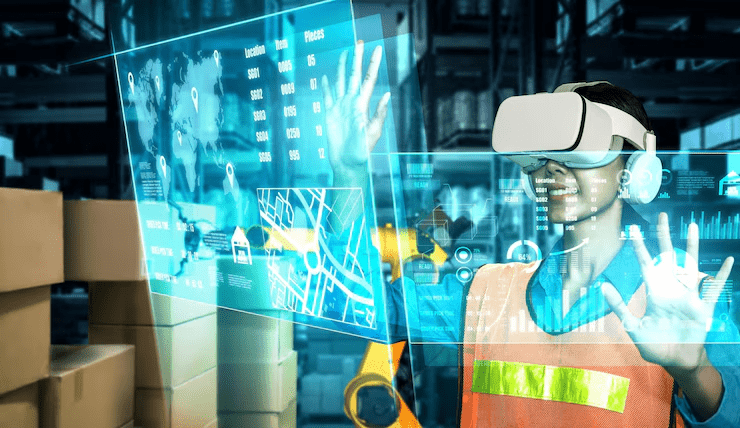
Deep Learning for Image Recognition in Products
Deep learning has revolutionized image recognition, and its application in products is vast and ever-expanding. The ability of deep neural networks, particularly Convolutional Neural Networks (CNNs), to automatically learn hierarchical features from raw image data has led to breakthroughs in tasks that were previously challenging for traditional computer vision methods. Here’s a breakdown of how deep learning is used for image recognition in products, along with key applications: How Deep Learning Powers Image Recognition in Products: Industrial Applications of Deep Learning for Image Recognition in Products: The power of deep learning for image recognition lies in its ability to learn from data, adapt to new variations, and scale to complex real-world scenarios, making it an indispensable technology for product-related applications across industries. What is Deep Learning for Image Recognition in Products? Deep Learning for Image Recognition in Products refers to the application of advanced artificial intelligence techniques, specifically deep neural networks (DNNs), to enable computers to “see” and understand images of physical products. This technology allows machines to identify, classify, locate, and even analyze the condition or features of products within digital images or video streams, mimicking human visual perception but at a vastly greater speed and scale. At its core, it leverages Convolutional Neural Networks (CNNs), a specialized type of deep learning architecture that is particularly adept at processing visual data. How it Works: Key Components of Deep Learning for Product Image Recognition: Why it’s “Required” for Products: Deep learning for image recognition is becoming indispensable for products because it enables automation, precision, and insights that were previously impossible or highly inefficient: In essence, Deep Learning gives machines “eyes” to understand and interact with the physical world of products, driving efficiency, quality, and new customer experiences across various industries. Sources Who is Required Deep Learning for Image Recognition in Products? Courtesy: iCert Global Deep Learning for Image Recognition in Products is becoming increasingly “required” by a diverse range of industries and organizations that deal with physical goods, digital visual content of products, or require high-speed, accurate visual inspection. Here’s a breakdown of who specifically needs this technology: 1. Manufacturing and Industrial Automation: 2. Retail and E-commerce: 3. Logistics and Supply Chain Management: 4. Agriculture: 5. Healthcare (Specifically for Medical Products/Devices): In essence, any organization that deals with physical products and seeks to: …is either already using or will soon require Deep Learning for Image Recognition in Products to remain competitive and meet evolving market demands. Sources When is Required Deep Learning for Image Recognition in Products? Deep Learning for Image Recognition in Products is becoming increasingly “required” under several critical conditions and trends, especially as we move further into 2025 and beyond. It’s no longer just an optional enhancement but a necessity for organizations seeking efficiency, quality, and competitive advantage. Here’s when it’s particularly required: In summary, Deep Learning for Image Recognition in Products is required when an organization needs to: The current landscape of high-volume manufacturing, competitive e-commerce, and the growing demand for visual intelligence means that delaying the adoption of deep learning in these areas is increasingly becoming a strategic disadvantage. Sources Where is Required Deep Learning for Image Recognition in Products? Deep Learning for Image Recognition in Products is required across a vast array of industries and environments where visual information is critical for operations, quality, safety, and customer engagement. Here’s a detailed breakdown of “where” this technology is a necessity: 1. Manufacturing and Production Lines: 2. Warehousing and Logistics: 3. Retail (Physical Stores): 4. E-commerce Platforms and Websites: 5. Agriculture and Food Processing: 6. Healthcare (Specific to Medical Products/Devices): 7. Automotive Industry: In essence, Deep Learning for Image Recognition in Products is required wherever visual data is abundant and critical for decision-making, quality assurance, operational efficiency, or enhanced user experience. It allows organizations to move beyond human limitations and traditional rule-based systems to achieve unparalleled accuracy, speed, and automation in understanding the visual world of products. How is Required Deep Learning for Image Recognition in Products? The “how” of Deep Learning for Image Recognition in Products refers to the specific processes, methodologies, and technologies that are required to implement and maintain such systems effectively. It’s a complex undertaking that goes beyond simply running an algorithm. Here’s how Deep Learning for Image Recognition is required in product-related applications: 1. Data-Centric Approach (The Foundation): 2. Model Selection and Architecture Design: 3. Training and Optimization: 4. Deployment and Integration: 5. Monitoring and Maintenance: In essence, the “how” of Deep Learning for Image Recognition in Products requires a deep commitment to data excellence, advanced AI engineering expertise, significant computational resources, seamless system integration, and a continuous cycle of monitoring and improvement. It’s a strategic investment in transforming visual operations. Case Study on deep learning required for image recognition in products? Courtesy: ZephyroAi Deep Learning is becoming increasingly indispensable for image recognition in products, especially when traditional methods fall short or when the scale and complexity of visual tasks demand a more sophisticated approach. Here’s a case study illustrating this requirement: Case Study: Automated Quality Control in High-Volume Manufacturing (Example: Automotive Parts) Client: A leading automotive components manufacturer. Challenge: The client manufactures millions of small, critical components daily, such as screws, bolts, connectors, or specific engine parts. Historically, quality control for these components relied heavily on: The client recognized that their existing methods were hindering production efficiency, increasing warranty claims due to undetected flaws, and preventing them from scaling their operations effectively while maintaining stringent quality standards. The Requirement for Deep Learning: The sheer volume of products, the need for consistent and highly accurate detection of even subtle defects, and the limitations of previous methods made Deep Learning a critical requirement. They needed a system that could: Solution (Deep Learning Implementation): The client implemented a Deep Learning-based Automated Visual Inspection (AVI) system: Results and Impact: This case study vividly demonstrates that Deep Learning was not just an option but a required technology for this manufacturer to overcome the limitations of traditional methods, scale their operations, and meet stringent quality demands in a high-volume production environment.