

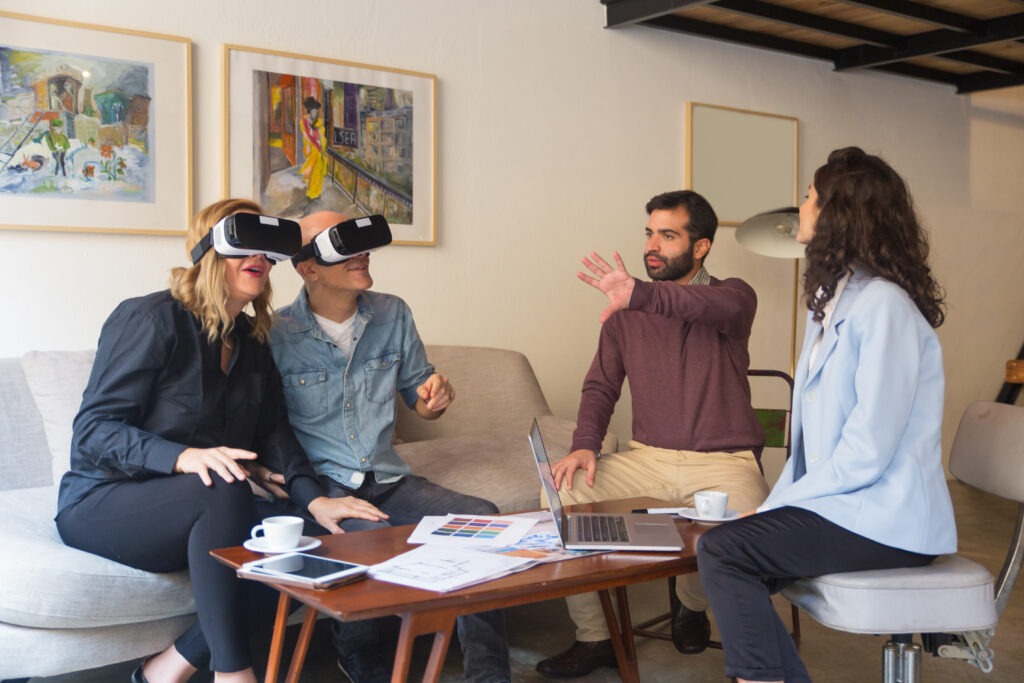
Mixed Reality Showroom Experiences
What are mixed reality showroom experiences? Mixed Reality (MR) Showroom Experiences combine the real world and virtual elements to create interactive, immersive retail environments. Customers use MR devices (like Microsoft HoloLens or Magic Leap) to see digital objects—such as products, configurations, or information—overlaid onto the physical space around them. This blends physical and digital worlds to enhance product visualization and shopping interaction. Key Features: Benefits: Industrial Applications: What is mixed reality showroom experiences? 🧠 Key Concept: Mixed Reality (MR) = Augmented Reality (AR) + Virtual Reality (VR)MR Showroom = A space (physical or virtual) where customers see, touch, try, or customize products using digital overlays in real time. 🧩 How It Works: 📱 Examples of MR in Showrooms: 🎯 Purpose & Benefits: Purpose Benefit Interactive shopping Better product understanding Personalized experiences Boosts customer satisfaction Reduce showroom space costs Show more without physical inventory Enable remote participation Global accessibility Increase engagement & conversions More sales through immersive try-ons 🧪 Real-World Use Cases: Industry Use Case Example Retail & Fashion Virtual fitting rooms and smart mirrors Automotive VR car customization and test drives Furniture AR room planning with digital product placement Real Estate 360° walkthroughs of properties using VR headsets Healthcare Virtual demo of medical tools or surgery setup 🔮 Future Potential: Who is Required Mixed Reality Showroom Experiences? 1. Retail Brands & Stores 2. Automobile Manufacturers & Dealers 3. Real Estate Developers & Agents 4. Event Organizers & Exhibition Hosts 5. E-Commerce Platforms 6. Healthcare & Medical Equipment Companies 7. Education & Training Providers 8. Tech Startups & Innovation Hubs 9. Luxury Goods & Fashion Houses 🎯 Summary: Mixed reality showroom experiences are primarily required by industries and businesses that want to: When is Required Mixed Reality Showroom Experiences? Courtesy: Suffolk University During Product Launches & New Releases 2. When Physical Showrooms Are Limited 3. In Remote or Pandemic Conditions 4. For Personalized & Customizable Products 5. During Trade Shows and Virtual Events 6. To Enhance Customer Experience and Engagement 7. When Training or Demonstration Is Needed 8. When Expanding Online & Omni-channel Strategies Summary Table: Scenario Reason for MR Showroom Requirement Product launches Immersive introduction & demos Limited physical space Virtual inventory & displays Remote access / pandemic Contactless, immersive shopping Personalized/custom products Real-time customization visualization Trade shows / virtual events Global reach without travel Enhance customer experience Differentiate & engage Training / demos Safe, cost-effective product demonstrations Omni-channel retail strategy Seamless physical & digital integration Where is Required Mixed Reality Showroom Experiences? Physical Retail Stores & Flagship Showrooms 2. Trade Shows, Expos & Conferences 3. Online E-Commerce Platforms 4. Car Dealerships & Auto Showrooms 5. Real Estate Agencies & Property Showrooms 6. Pop-up Stores & Brand Activations 7. Training Centers & Product Demo Rooms 8. Corporate & Innovation Labs 9. Remote or Rural Markets Summary Table: Location/Setting Why MR Showroom is Required Physical Retail Stores Boost engagement and personalization Trade Shows & Expos Global reach and cost-effective showcasing Online Platforms Immersive e-commerce experiences Auto Showrooms Virtual test drives and customization Real Estate Showrooms Virtual walkthroughs and interior visualization Pop-up Stores Brand engagement and marketing buzz Training Centers Safe, effective product demos Innovation Labs Prototype and concept showcasing Remote/Rural Markets Access to customers without physical presence How is Required Mixed Reality Showroom Experiences? Assess Business Goals and Customer Needs 2. Choose the Right Technology 3. Design Immersive Content 4. Set Up the Physical or Virtual Space 5. Integrate Customer Interaction Tools 6. Test and Iterate 7. Train Staff and Support Customers 8. Launch and Promote 9. Maintain and Update 🛠️ Key Components and Tools Component Purpose AR/VR Headsets Immersive visualization Smart Mirrors Virtual try-ons for fashion and accessories Interactive Displays Touch and gesture-based product exploration 3D Modeling Software Create realistic product models MR Content Platforms Build and manage MR environments AI Chatbots Personalized customer assistance Summary: Mixed Reality Showroom Experiences are required by: Case Study on Mixed Reality Showroom Experiences? Case Study: BMW’s Mixed Reality Showroom Experience Background BMW, a leading luxury automobile manufacturer, faced challenges with traditional car showrooms: To address this, BMW adopted Mixed Reality (MR) Showroom Experiences leveraging Microsoft HoloLens technology. Objective Implementation Technology Used: Experience Features: Results Challenges Lessons Learned Conclusion BMW’s MR showroom experience is a successful example of how mixed reality can revolutionize retail environments, especially for complex, high-value products. The immersive experience not only enhances customer satisfaction but also drives business growth and brand differentiation. White paper on Mixed Reality Showroom Experiences? Courtesy: Phiaro Inc White Paper: Mixed Reality Showroom Experiences Executive Summary Mixed Reality (MR) Showroom Experiences represent the convergence of physical and digital retail environments by blending augmented reality (AR) and virtual reality (VR) technologies. MR allows consumers to interact with virtual objects seamlessly integrated into the real world, transforming traditional showroom experiences into immersive, interactive journeys. This white paper explores how MR showrooms are reshaping retail, the underlying technologies, implementation strategies, challenges, and future trends. It serves as a comprehensive guide for businesses aiming to adopt MR to enhance customer engagement, drive sales, and future-proof their retail strategies. 1. Introduction 1.1 Definition of Mixed Reality Showroom Experiences Mixed Reality Showroom Experiences use advanced spatial computing to overlay and integrate digital content—such as 3D product models, interactive interfaces, and real-time data—into physical showroom environments or fully virtual spaces accessible remotely. Unlike AR or VR alone, MR enables real and virtual objects to coexist and interact dynamically. 1.2 Importance in Modern Retail Consumer expectations for personalized, engaging, and convenient shopping are driving adoption of immersive technologies. MR Showrooms allow retailers to: 2. Technology Overview 2.1 Hardware Components 2.2 Software Platforms 3. Implementation Strategy 3.1 Assessing Business Needs 3.2 Content Development 3.3 Infrastructure Setup 3.4 User Experience Design 4. Benefits of MR Showroom Experiences 5. Challenges and Considerations 6. Case Studies and Industry Applications 7. Future Outlook 8. Conclusion Mixed Reality Showroom Experiences are poised to redefine retail by merging the best of physical and digital worlds. Businesses that invest strategically in MR can unlock new levels of customer engagement, operational efficiency,