
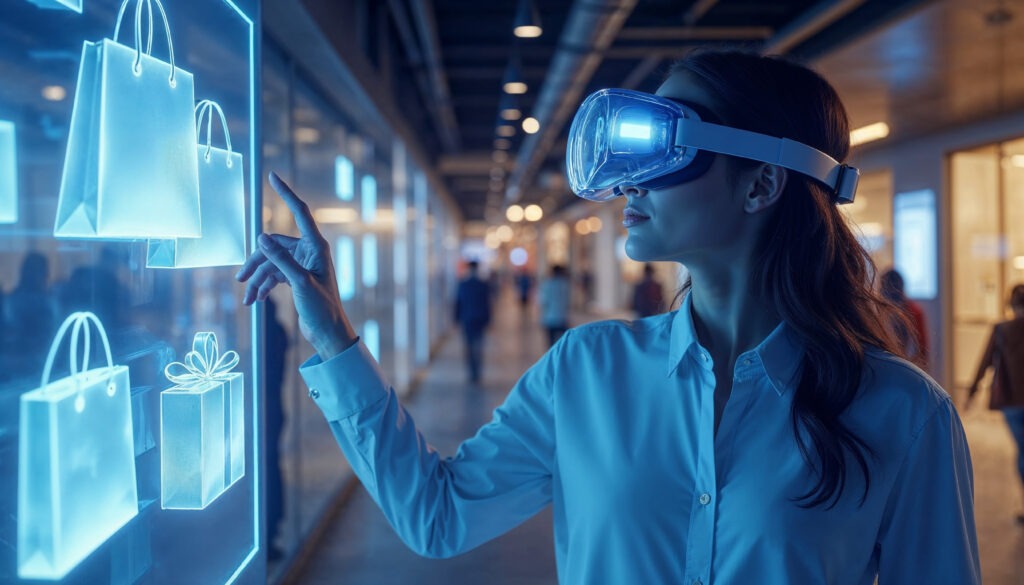
Multi-Sensory VR Retail Stores
🔍 Key Features of Multi-Sensory VR Retail Stores 1. Visual Experience (Sight) 2. Auditory Experience (Sound) 3. Haptic Feedback (Touch) 4. Olfactory Experience (Smell) 5. Gustatory Experience (Taste) 🧠 Applications in Retail 🚀 Benefits 🛠️ Technologies Involved 🔮 Future Outlook What are multi-sensory VR retail stores? 🔑 In Simple Terms: It’s like putting on a VR headset and stepping into a virtual store where you can see, hear, touch, and even smell the products—just like real life, but done through advanced technology. 🧠 What Makes It “Multi-Sensory”? Sense How It’s Used in VR Stores 👀 Sight 3D visuals of products, virtual shelves, store design 👂 Sound Background music, product sounds, voice assistants ✋ Touch Haptic gloves or controllers to feel items 👃 Smell Scent devices release fragrances (like perfumes) 👅 Taste Experimental – may simulate flavors for food previews 🛍️ Why It’s Used in Retail 💡 Example Imagine you’re shopping for a jacket: 🧭 Conclusion Multi-Sensory VR Retail Stores combine advanced VR with sensory technology to create a lifelike, interactive, and emotional shopping experience—changing the way we shop online and in the metaverse. Who is Required Multi-Sensory VR Retail Stores? 1. Retail Brands & Businesses Especially in: 👉 Why? 🧑💼 2. Marketing & Branding Agencies 🛒 3. E-commerce Platforms 🌍 4. Global Consumers ♿ 5. People with Physical Disabilities 🎓 6. Education & Training Providers 🏗️ 7. Real Estate & Commercial Developers 🧪 8. Tech Companies & Startups 📌 Summary Table Who Needs It Purpose / Benefit Retailers (Fashion, Beauty, etc.) Product engagement & fewer returns E-commerce platforms Enhanced online shopping experience Consumers Immersive, convenient shopping Disabled individuals Greater accessibility Marketing agencies Immersive brand storytelling Educators Practical training tools Real estate developers VR retail design previews Tech innovators New product development in VR and sensory tech When is Required Multi-Sensory VR Retail Stores? 📆 When Is It Required? 🛒 1. When Traditional E-commerce Feels Flat 🌎 2. When Physical Store Access Is Limited 🧠 3. When Customer Engagement & Emotion Matter 💼 4. When Selling High-Involvement or Luxury Products ♿ 5. When Accessibility Is a Priority 🏪 6. When Brands Want to Reduce Store Costs 🚀 7. When Competing in the Metaverse or Future Retail 📚 8. When Training Staff in Retail Simulation ✅ Ideal Moments to Use It Situation Why It’s Ideal Product Launch Create buzz with immersive virtual try-ons or demos Black Friday / Festive Sales Let people “experience” products from home Global Brand Campaigns Deliver a consistent sensory experience worldwide Store Redesign Test customer response to new layouts virtually Customer Feedback Testing Study how sensory experiences affect behavior 🎯 Summary: Multi-Sensory VR Retail Stores are required when realism, engagement, convenience, or accessibility are important in the shopping experience—especially in an increasingly digital world. Where is Required Multi-Sensory VR Retail Stores? Courtesy: CNN 10 🌍 Where Is Multi-Sensory VR Retail Required? Multi-Sensory VR Retail Stores are most valuable in environments where physical limitations, high customer experience expectations, or innovation-driven competition make immersive digital shopping a strategic advantage. Here are the key locations and contexts where this technology is needed or in demand: 1. 🏙️ Urban Retail Hubs & Malls ✅ Benefit: Delivers big-brand experience in small or shared retail spaces. 2. 🌐 E-Commerce Platforms ✅ Benefit: Reduces return rates and increases buyer confidence. 3. 🌎 Global Brands with Distributed Customer Base ✅ Benefit: Borderless brand presence with immersive storytelling. 4. 🛫 Airports & Travel Retail ✅ Benefit: Engaging high-value travelers during wait times. 5. 🏡 Home Use (via Consumer Headsets) ✅ Benefit: Convenience, accessibility, and interactive exploration. 6. 🏢 Retail Innovation Labs & Flagship Experience Centers ✅ Benefit: Brand buzz + early consumer adoption. 7. 📈 Emerging Markets with Limited Retail Infrastructure ✅ Benefit: Digital-first market penetration with immersive UX. 8. 🏥 Special Needs Retail Environments ✅ Benefit: Inclusive shopping experiences with sensory feedback. 📌 Summary Table Location/Context Why It’s Needed Malls & Cities Maximize space, reduce overhead Online Stores Add sensory depth to flat e-commerce Global Brands Enable borderless customer experience Airports Engage high-end consumers Homes Personal, immersive shopping convenience Innovation Labs Experimentation & brand value Emerging Markets Leapfrog to next-gen retail Accessibility Cases Enable all shoppers to engage equally How are required multi-sensory VR Retail Stores? 🧱 Step-by-Step: How It’s Done 1. Business Planning 2. 3D Store & Product Design 3. VR Platform Integration 4. Sensory Technology Integration Sense Technology Used 👀 Sight VR headsets, 3D environments, animated UI 👂 Sound Spatial audio, brand music, voice assistants ✋ Touch Haptic gloves, suits, or controllers 👃 Smell Scent-emitting devices (e.g., VAQSO, FeelReal) 👅 Taste (Experimental) Taste simulators for food demos 5. E-commerce & Backend Connectivity 6. Personalization with AI 7. Testing & Optimization 8. Launch & Promotion ⚙️ Required Components Component Tools/Examples 3D Modeling Software Blender, Maya, SketchUp VR Development Engine Unity, Unreal Engine VR Hardware Meta Quest, HTC Vive, Apple Vision Pro Haptics Devices Teslasuit, HaptX, SenseGlove Scent Devices VAQSO, Aryzon, FeelReal E-commerce Platform Shopify, WooCommerce, Magento AI Integration ChatGPT, Google Cloud AI, custom models 📌 Summary: How is it required? → By combining immersive VR design, multi-sensory hardware, and software integration, businesses can build fully interactive, emotionally engaging, and accessible VR retail environments that go far beyond traditional e-commerce. Case Study on Multi-Sensory VR Retail Stores? 🎯 Case Study: LUXEA – A Premium Perfume Brand Launches Multi-Sensory VR Retail Store 🏢 Background LUXEA is a premium European perfume and cosmetics brand planning to expand its digital presence and attract younger, tech-savvy consumers. Traditionally reliant on luxury physical stores, LUXEA faced challenges in conveying fragrance experience online. 🎯 Objective 🧰 Implementation Steps 1. Environment Design 2. Sensory Technology Integration 3. Product Interaction 4. AI-Personalization 5. Multi-Platform Access 📊 Results KPI Pre-VR Store Post-VR Launch (3 Months) Online Sales +0.7% growth 🚀 +18% growth Return Rate 21% 🔻 Reduced to 11% Avg. Time on Site 2.5 mins ⏱️ 12 mins Social Media Engagement 5K mentions/month 📈 18K mentions/month Customer Satisfaction 74% 🌟 92% VR Quiz Conversions N/A 💡 68% completed the quiz and added to cart